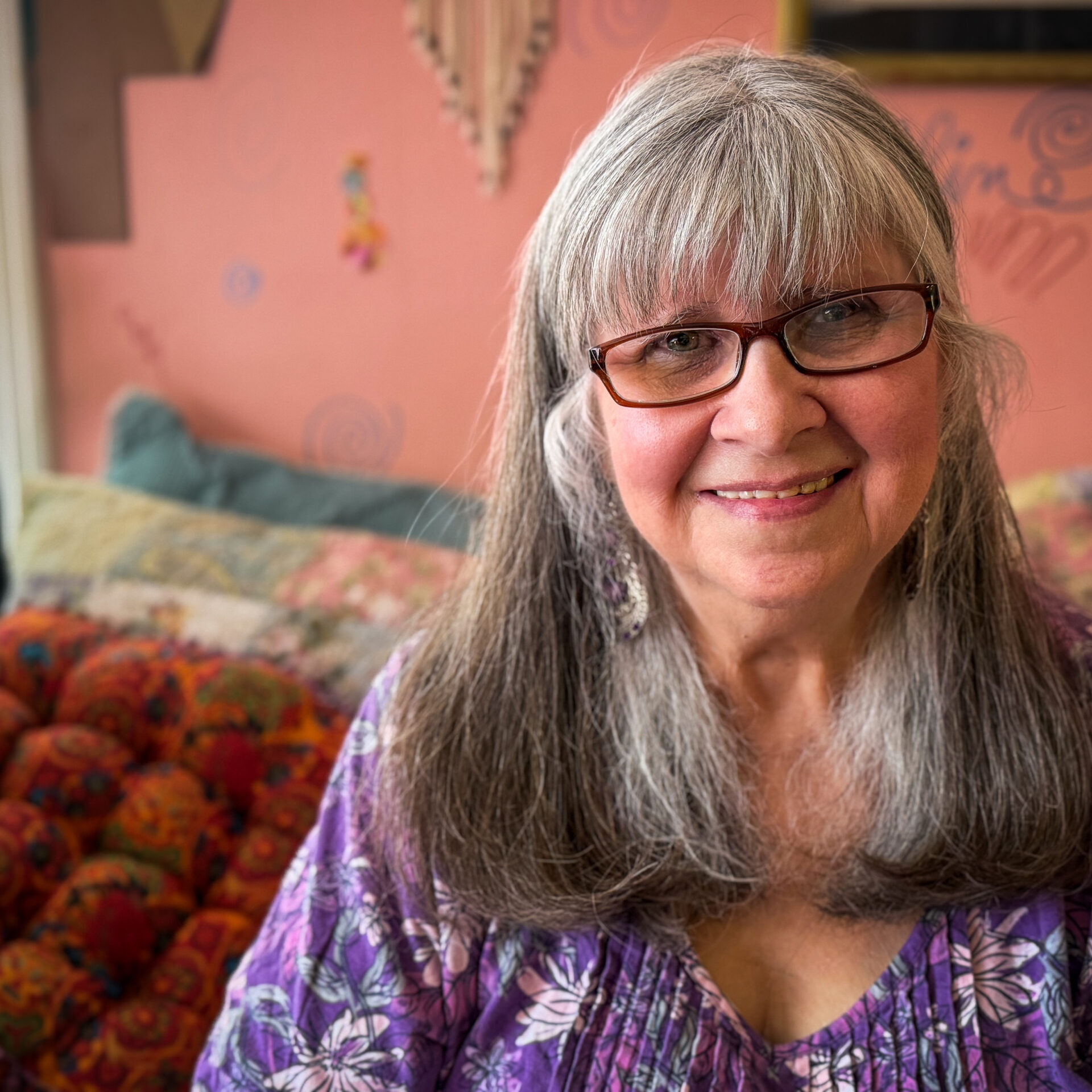
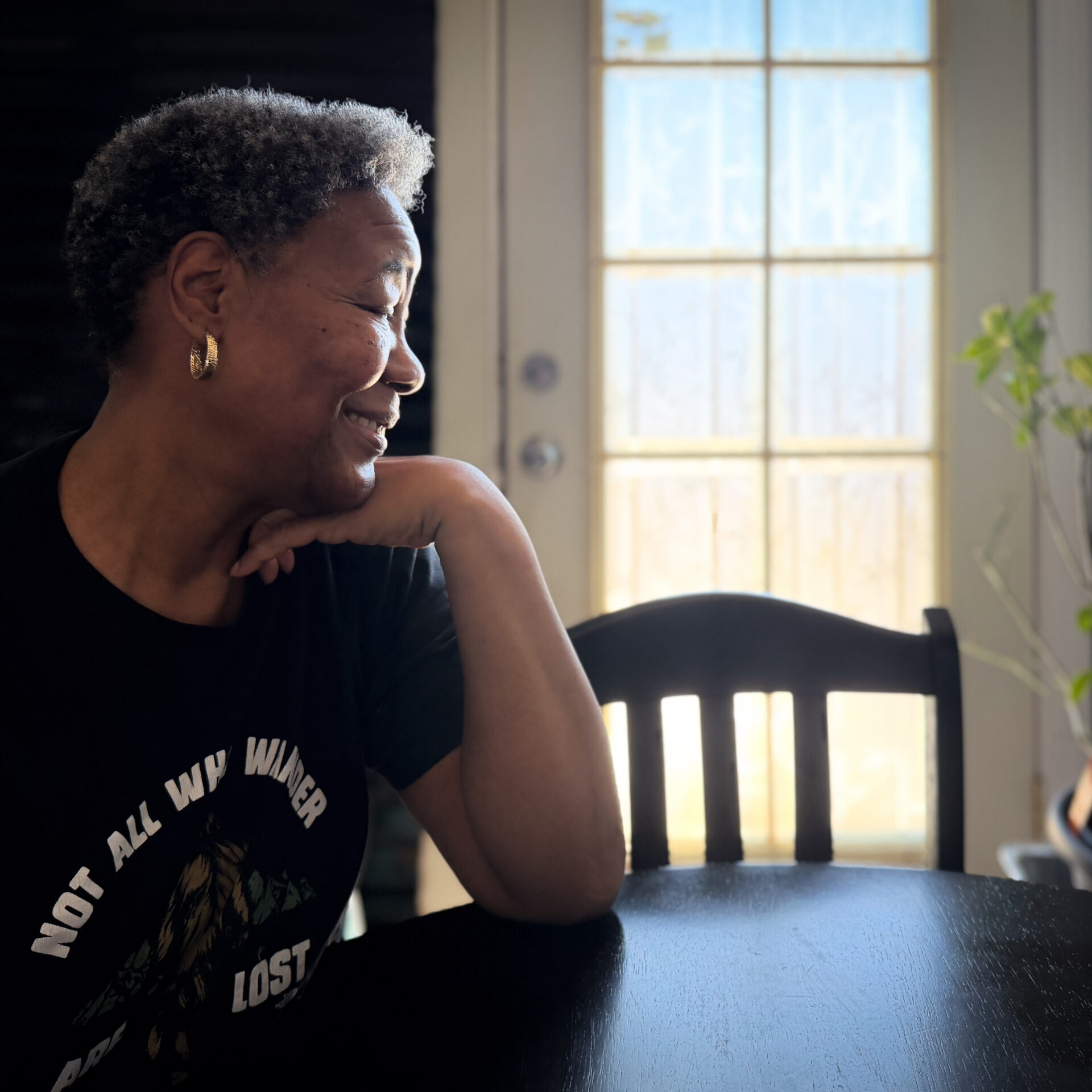
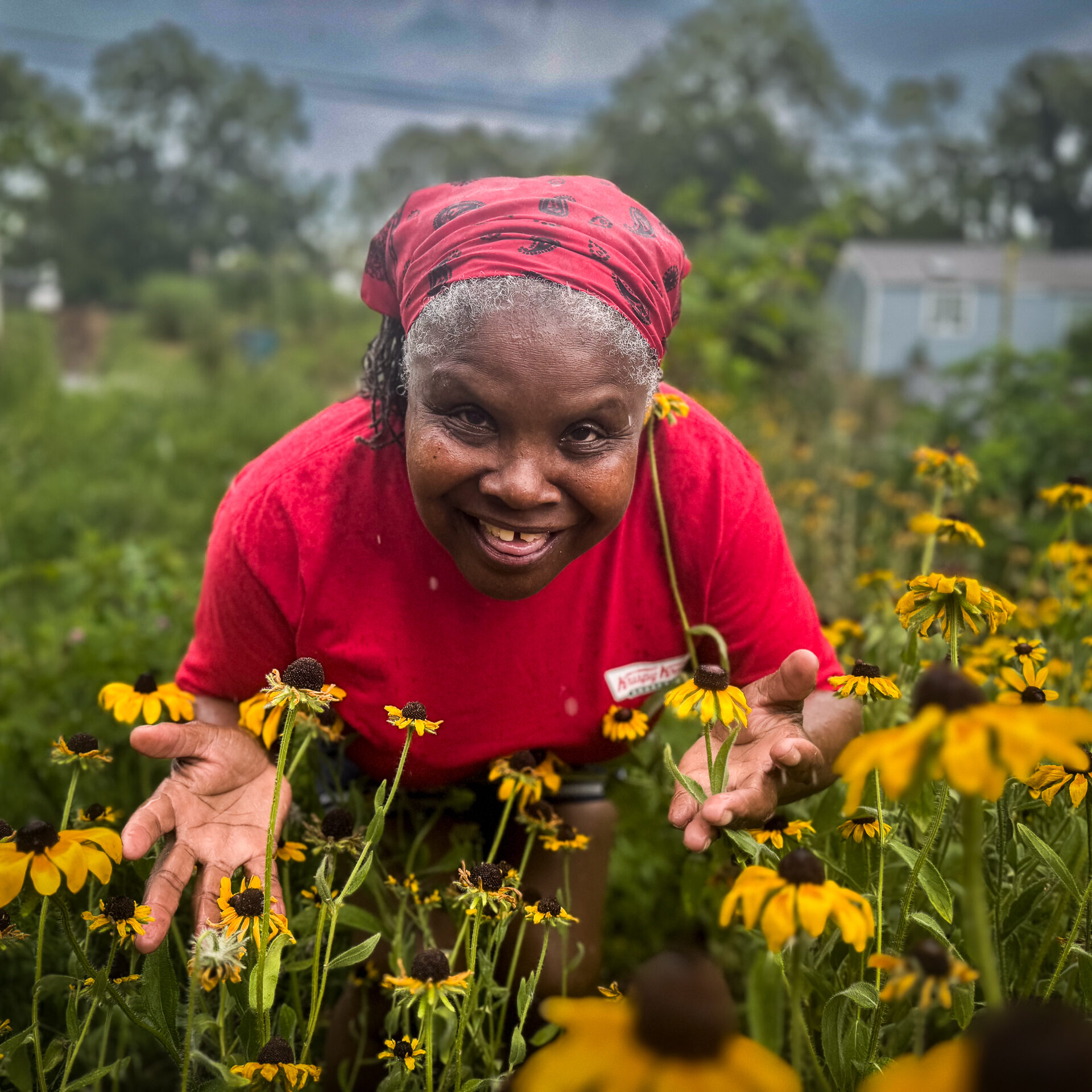
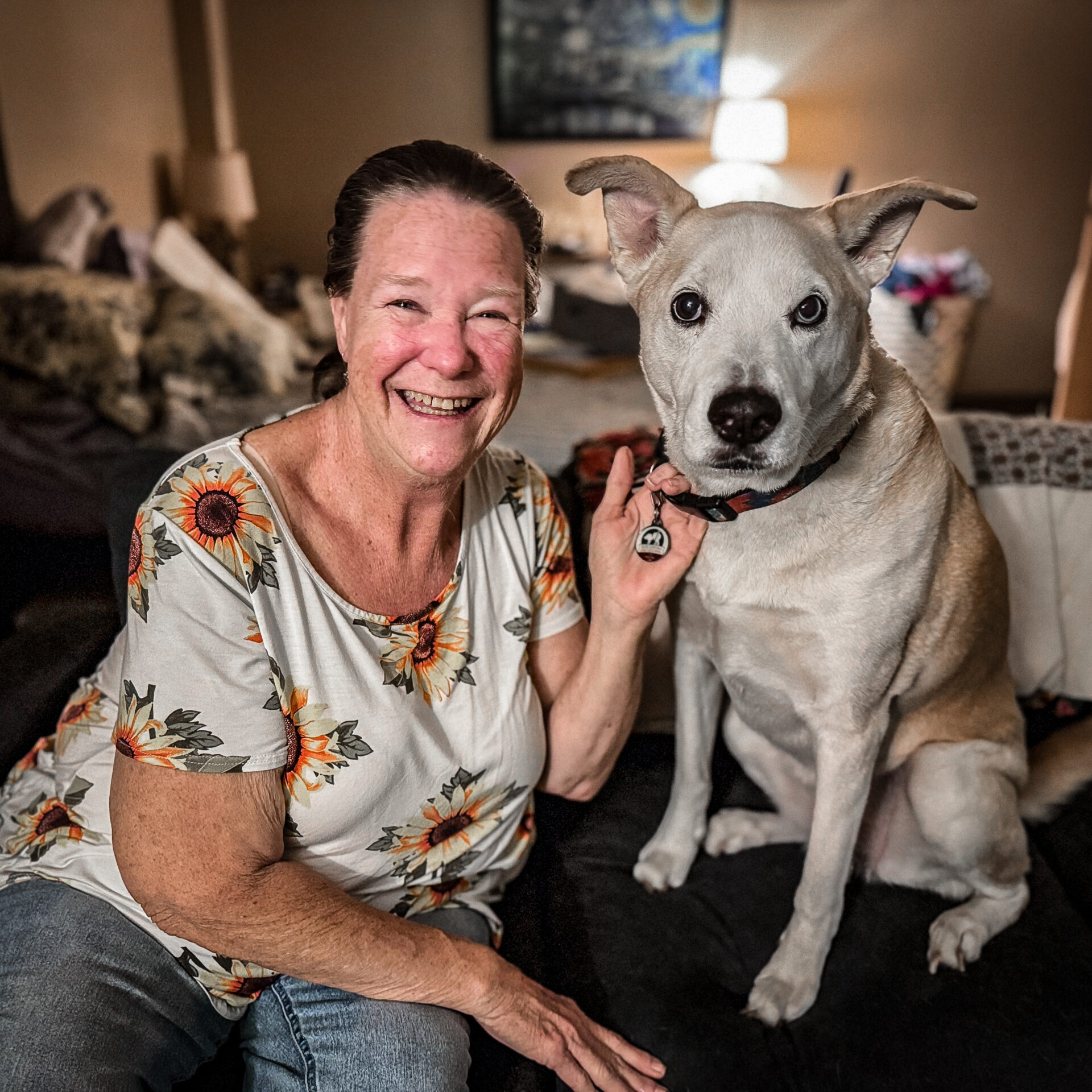
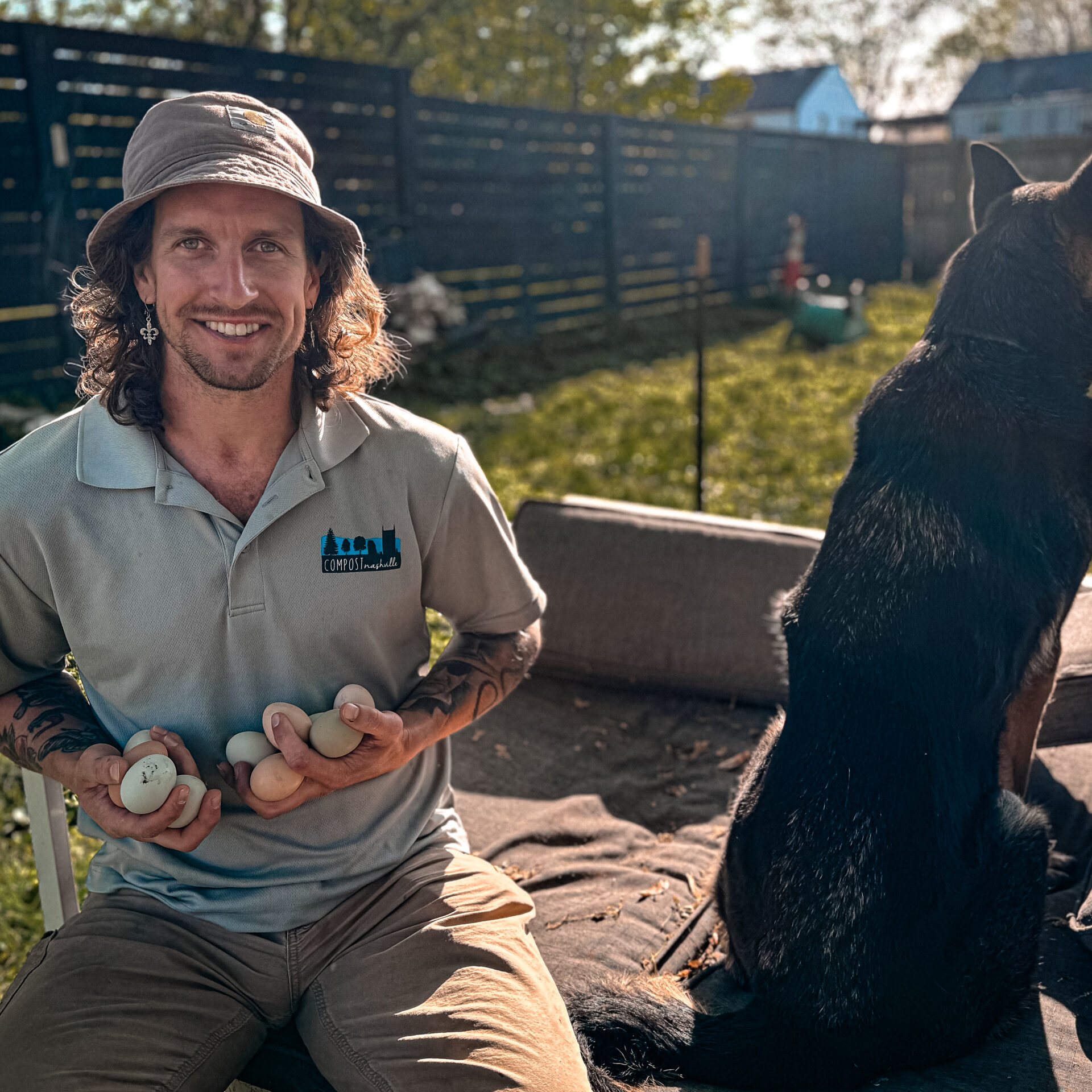
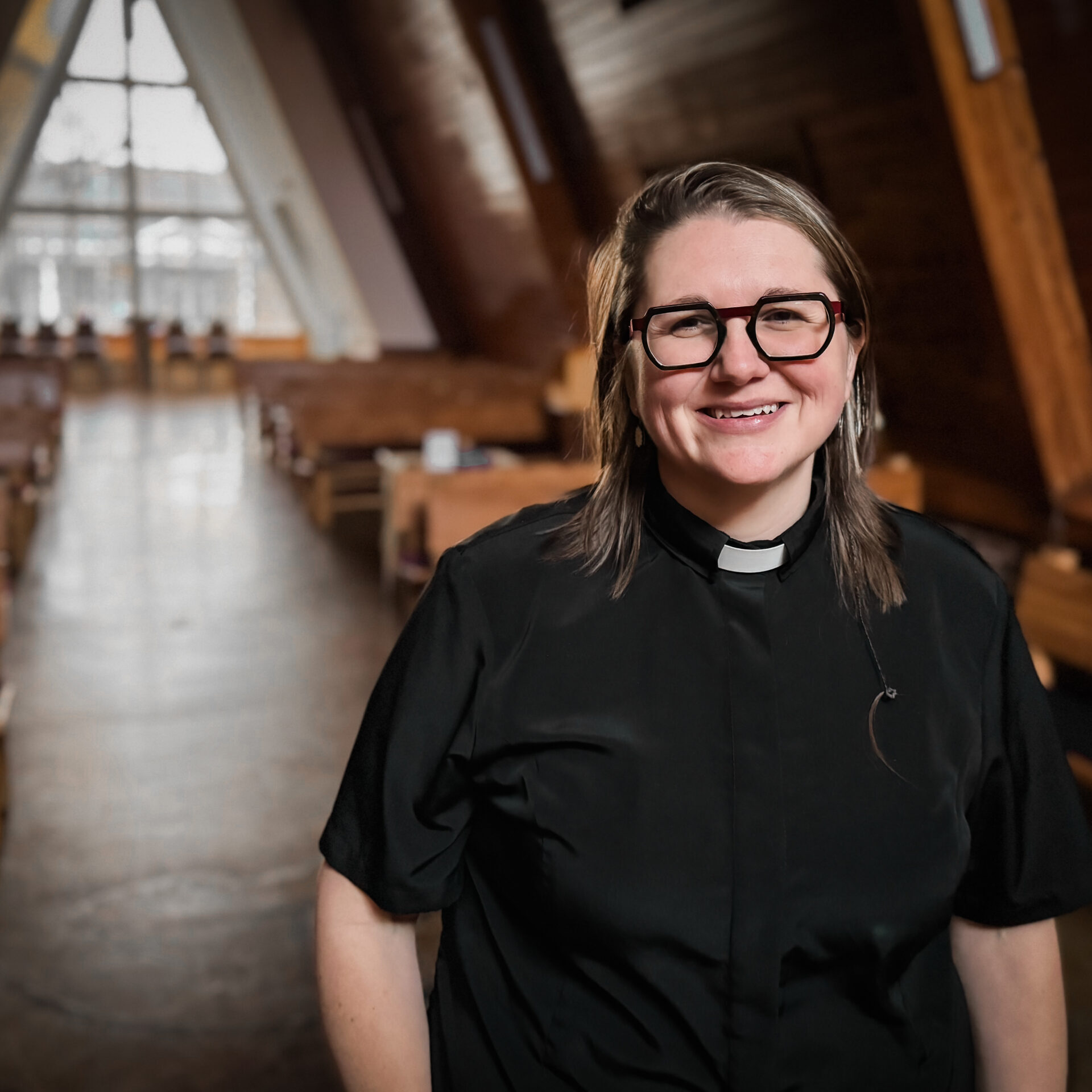
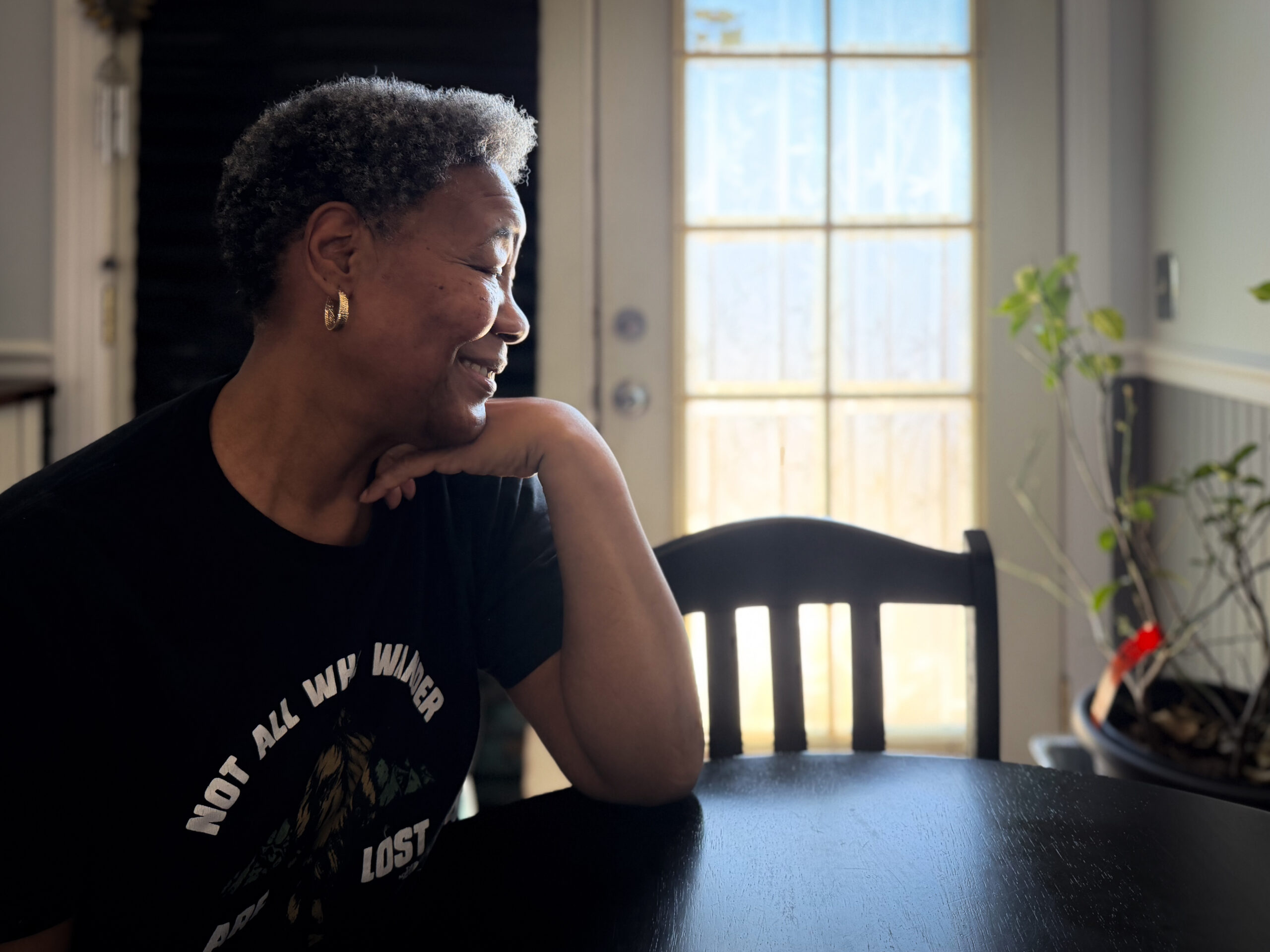
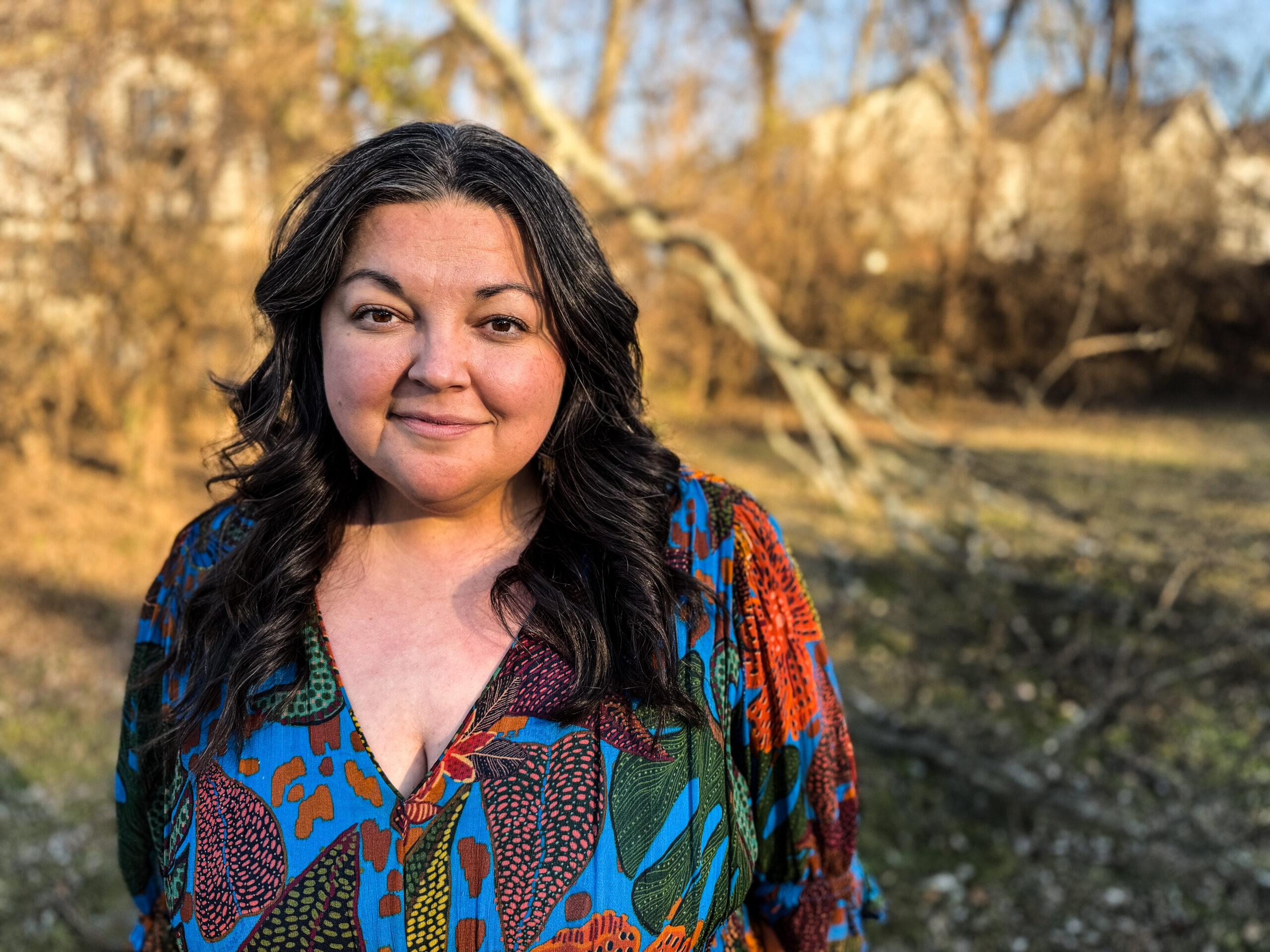
A collaboration between, Urban Green Lab and Tennessee State University, Voices of Resilience™ is a unique archive of oral histories that fosters community listening and addresses the growing issues brought by a shifting climate.
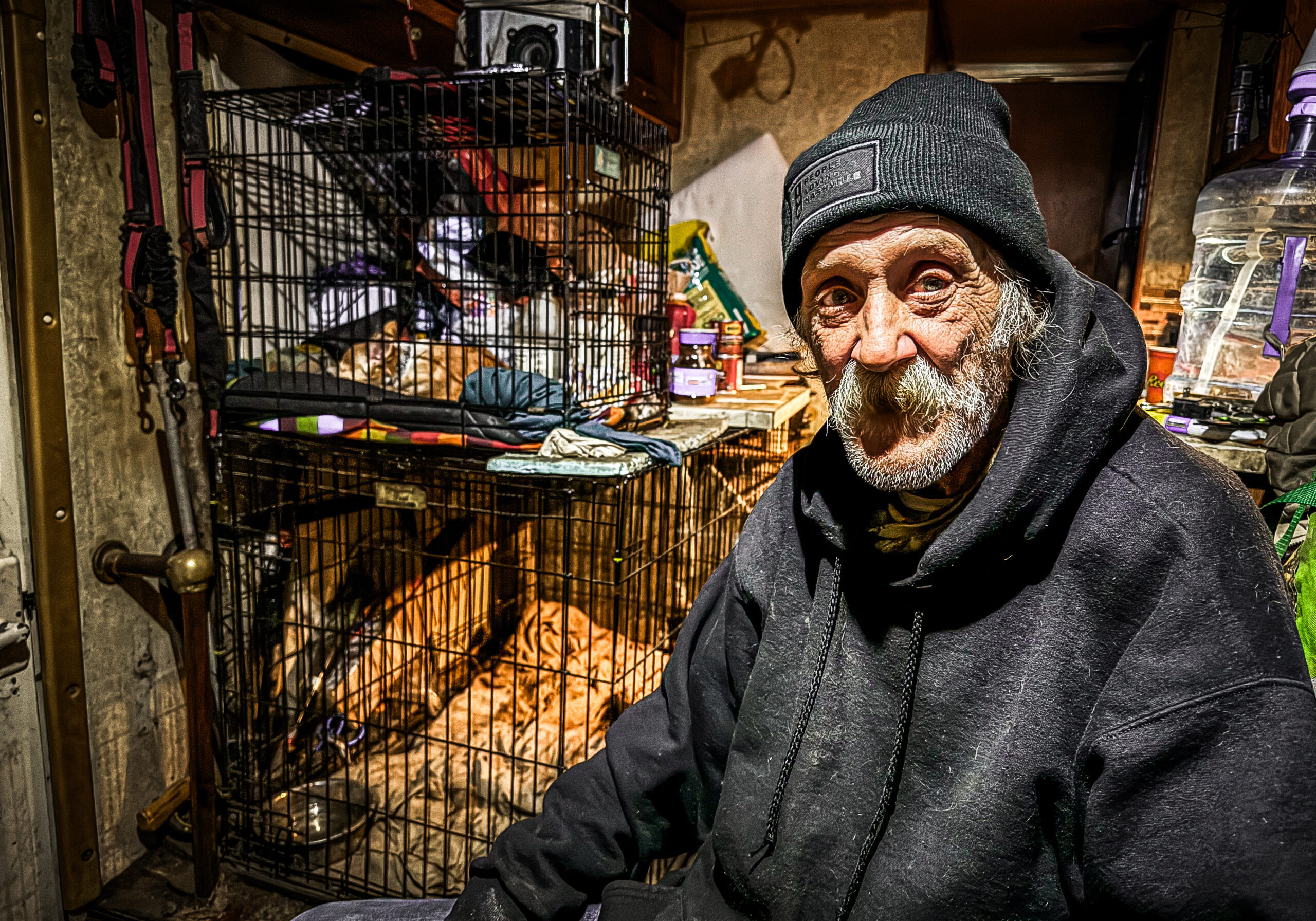
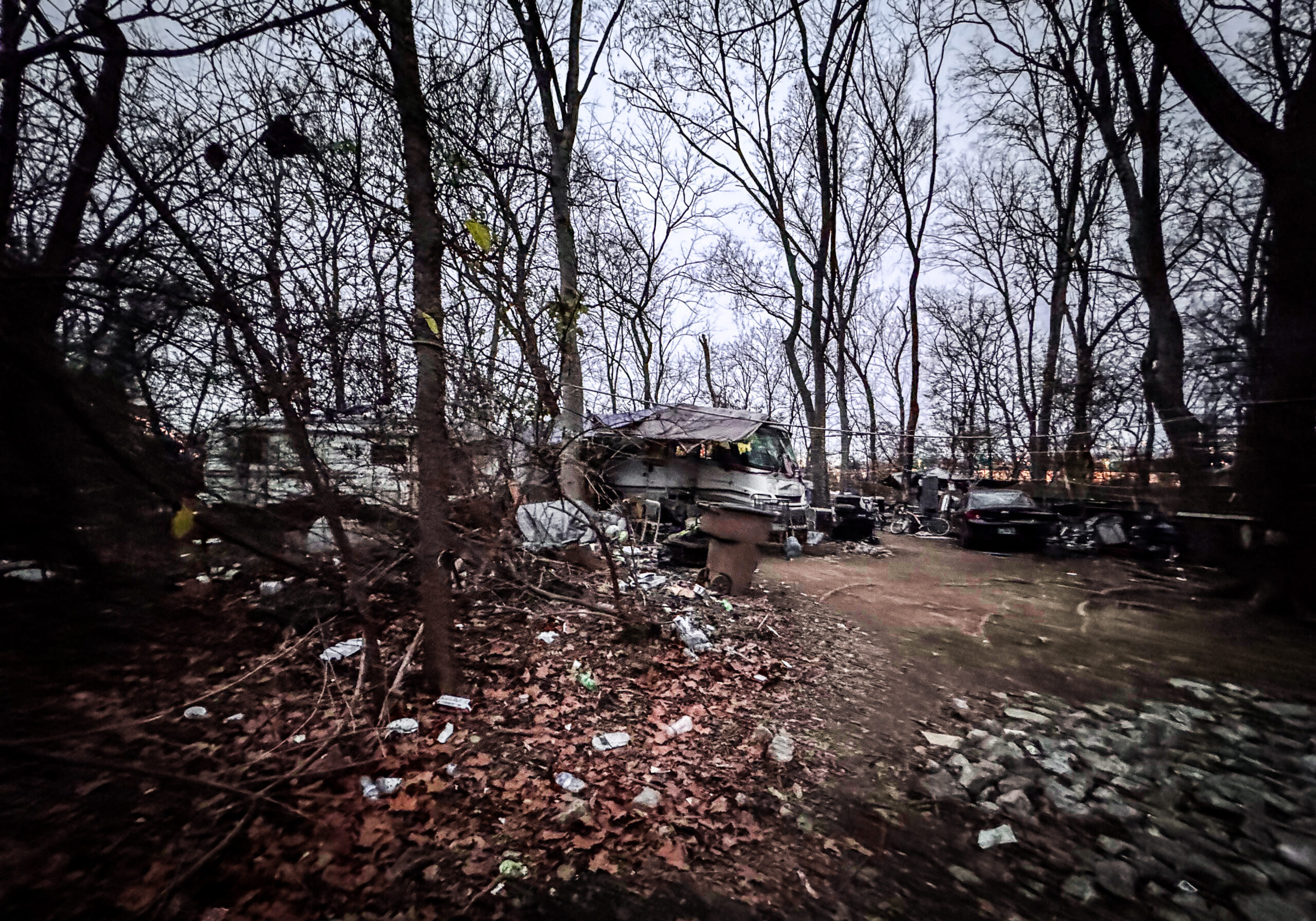
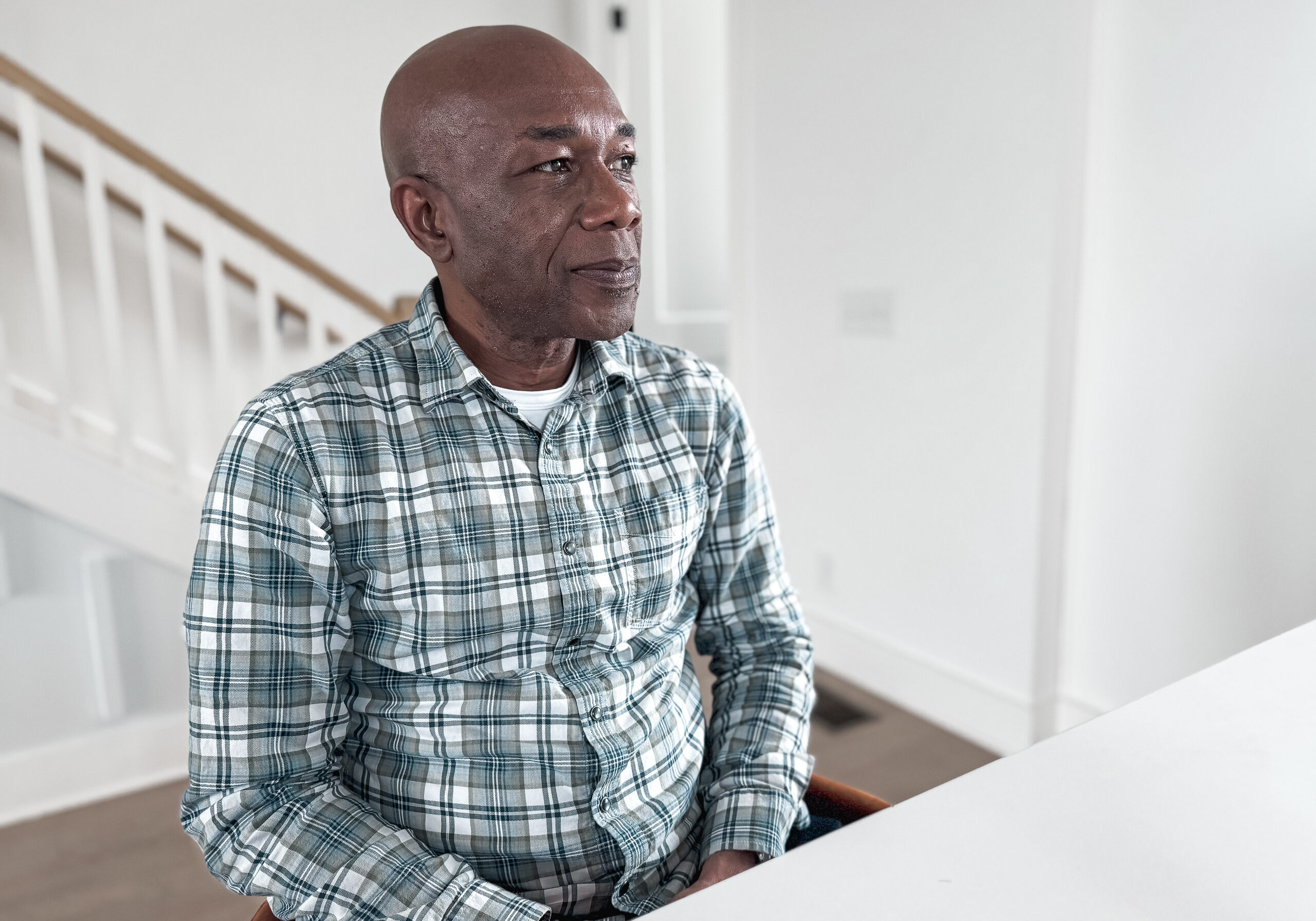
The archive features the voices of some Nashville community members experiencing climate change first, worst, and longest. Each person shares their story, allowing us to document this moment in Nashville's history in their voice and perspective.
Click the button to view the interactive storymap.
Listen to the Archive
Listener Note: These interviews may contain references to drug use, suicide, domestic violence, and illegal activities.
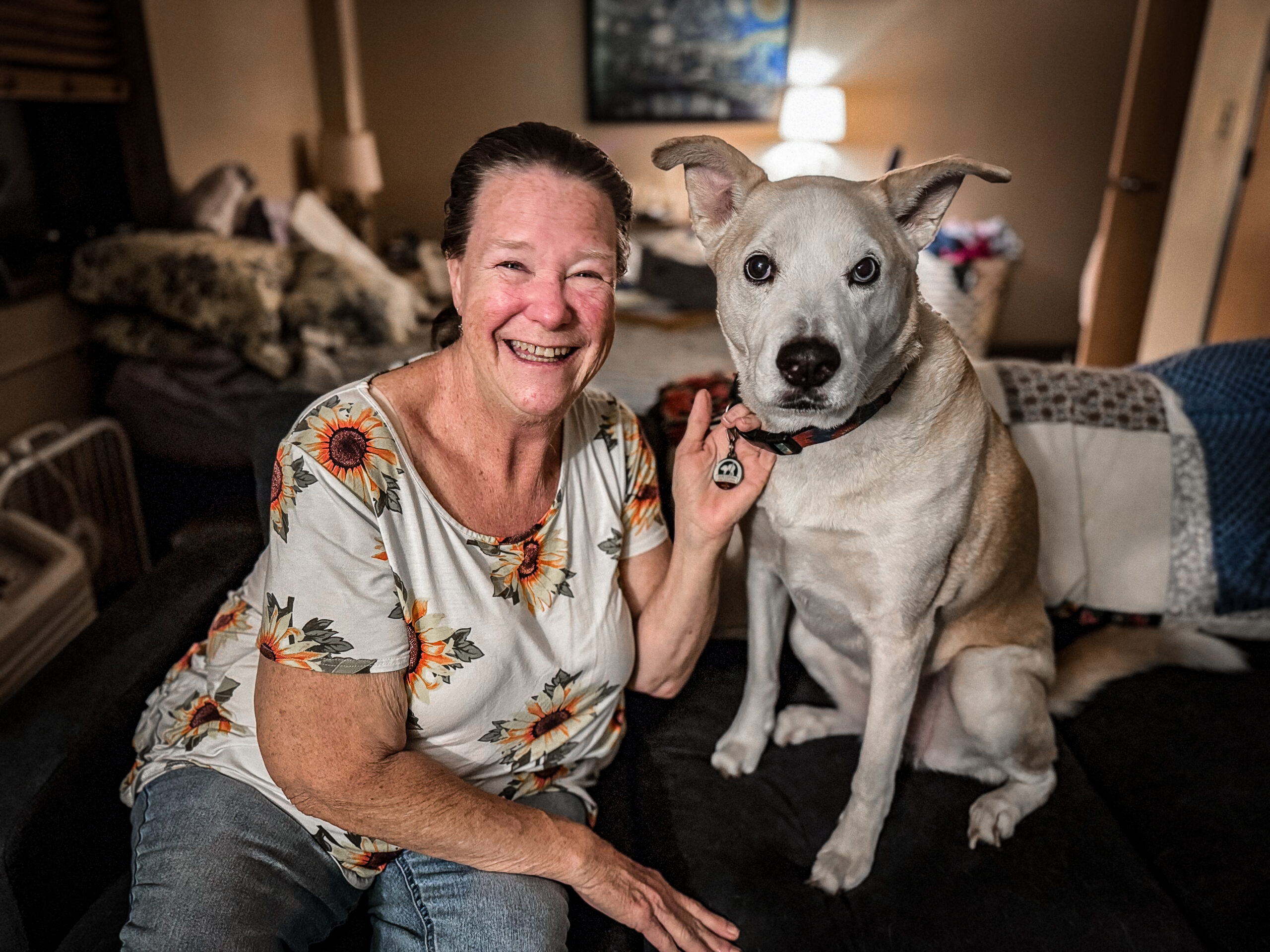
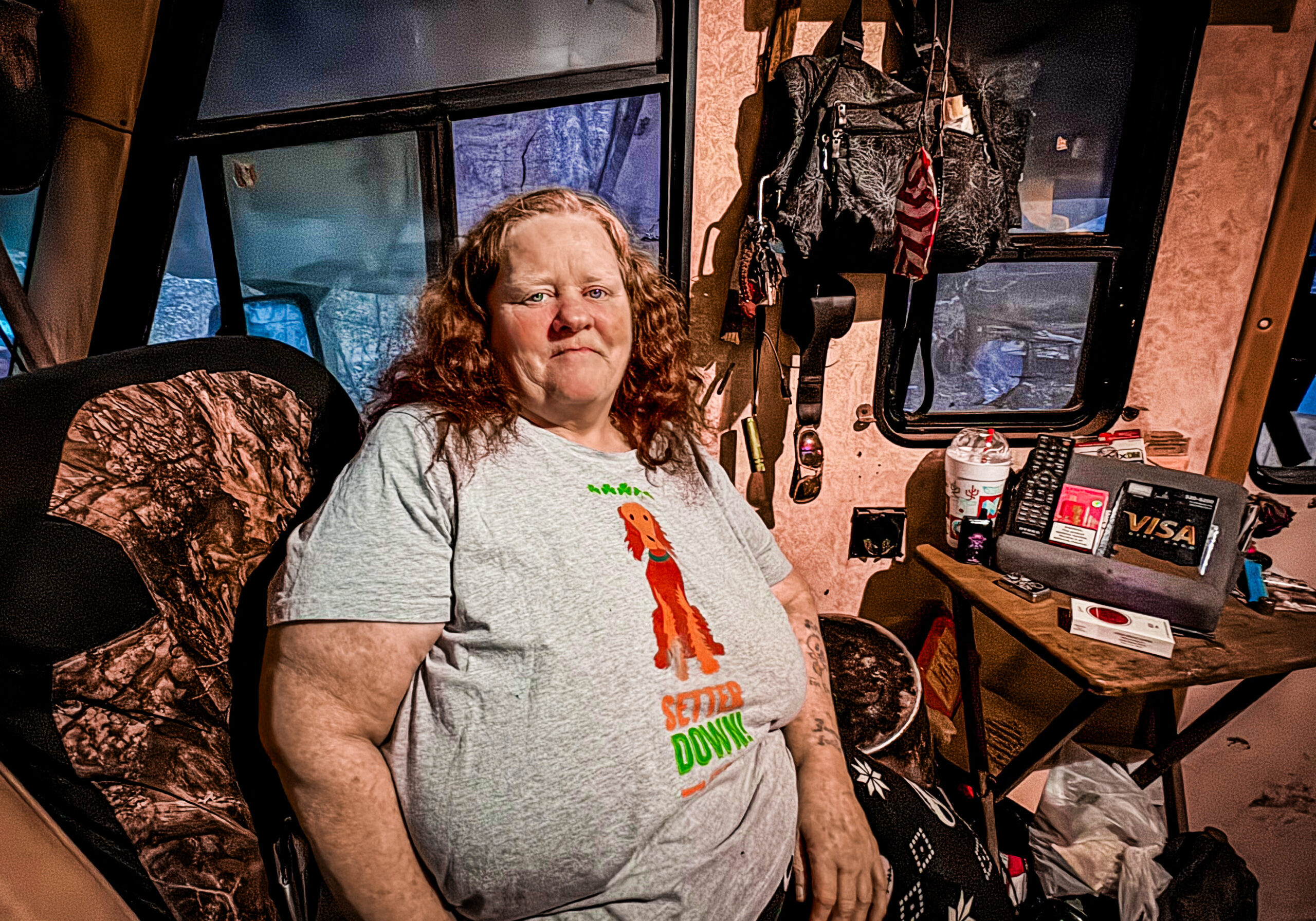
Hear from Ellie Kane
A Nashvillian Navigating Health and Living Costs in a Shifting Climate
"Before the storm, I was counting my steps and trying to increase them every day... I had gone from 335 to about 300 and then this happened. At the shelter we were eating all the time... I put on weight, and then of course you come home and you don't have access to cook the same foods because you can't be washing dishes. So I got fully back on my butter kick."
Climate Connection
Climate change does not always announce itself with a single catastrophe. For many Nashvillians, it arrives as accumulation — a burst pipe that insurance won't fully cover, a health routine disrupted for months, a nervous system that no longer trusts the sky the way it used to. The World Health Organization has officially declared climate change a health crisis — and for elderly residents and those on fixed incomes living in aging homes, that declaration is not just abstract policy. It is a bowl of water heated in a microwave. It is $218 toward a plumbing repair that costs far more. It is thirty-five pounds of hard-won mental and physical health progress, reversed.
Older adults are particularly vulnerable to climate change–related health effects based on the characteristics of their homes — their age, quality of construction, and amenities — and multiple factors disincentivize older adults from making home improvements to prepare for extreme weather. Eighty percent of older adults have at least one chronic disease, which impairs physiological responses and diminishes the ability to adapt to changes in environmental conditions. Among adults 50 and older exposed to extreme weather events, 18% reported harm to mental health and 17% to physical health — with harm significantly more prevalent among those with chronic conditions, people living alone, and those with unstable housing conditions. Unlike younger adults, who can change their spending in response to rising cost burdens, seniors on fixed incomes have less flexibility. For older adults facing increased or unexpected housing costs, limited budgeting alternatives can lead to homelessness — and between 2019 and 2022, the share of older adults experiencing homelessness increased 37 percent.
The built environment is at the center of this story. Homes like Ellie's — older structures in established Nashville neighborhoods — were not designed for the new climate norms evolving in Middle Tennessee. Houses in warmer climates often have pipes running along exterior walls or through uninsulated spaces. When temperatures stay below freezing for extended periods, those systems fail — and a single frozen pipe can cause hundreds, or even thousands, of dollars in damage. Tree canopies that once insulated neighborhoods from temperature extremes have been steadily reduced — both by development and by the very storms that grow stronger due to the urban canopy’s absence. When Nashville cut its tree-trimming budget, it was not a climate decision. But it had climate consequences: more branches on power lines, more outages, more burst pipes, more homeowners like Ellie left holding the gap between what the storm cost and what the system would pay.
The health costs compound alongside the financial ones. Research consistently documents that older adults are highly vulnerable to the physical and mental health impacts of extreme weather and natural disasters — experiencing anxiety, depressive symptoms, post-traumatic stress, and sleep disturbances following climate-related events. Those with pre-existing mental health challenges are at higher risk of poor physical and mental health outcomes and may lack the ability to limit exposure during extreme events. Damage to homes, livelihoods, and displacement from home are key exposure pathways linking climate events to lasting mental health consequences — and the effects compound over repeated exposures. Ellie, who used to be the calm one, now nearly passes out during tornado warnings. The storm is over. The nervous system remembers.
What Ellie's story reveals is how little margin exists for people in her situation when the infrastructure around them fails. Health systems are underprepared and buckling under the weight of climate health impacts — unable to keep up with the alarming rate at which those impacts are being experienced. There are no formal programs to replace the running water she has been without for three months. There is no city service to close the gap between her insurance payout and her plumbing repair. What she has is resourcefulness, a partner, a network of people reachable by Facebook Messenger, and a musician-plumber who will eventually be back in town.
Nashville has the capacity to build systems that close these gaps before the next storm. The question is whether it will — and who it will choose to reach first.
Additional Information
A New Yorker's nerve, a lifetime of resourcefulness, and an unshakeable refusal to stay in the negative shapes everything Ellie Kane does. Born in Brooklyn and raised on Staten Island, she left home at twenty-four with a few hundred dollars, a Greyhound ticket, and a plucky spirit. Nashville has been home ever since.
Ellie has lived in her Inglewood house for over twenty years — the house her mother placed her name on the deed the day they closed, quietly ensuring it would pass to her daughter without complication or cost. What her mother could not protect her from was everything that came after: the tornadoes, the flooding, the ice, and the slow, compounding arithmetic of keeping an aging home standing through a climate that no longer behaves the way it used to.
Winter Storm Fern made the math undeniable. Days without power forcing Ellie and her husband to spend nearly a week in a warming shelter. A burst pipe. An insurance payout of $218 toward repairs that cost far more. Three months later, still no running water — still bathing from a bowl, heating water in the microwave, washing her hair over two separate bins.
And beneath the property damage, a quieter cost: thirty-five pounds of hard-won health progress reversed. Depression returning. A panic attack during a tornado warning that had nothing to do with the ice storm — except that it had everything to do with it. Ellie, who used to be the calm one, is now beginning trauma therapy.
The storm is over. The bill is still running.
Built Environment: The human-made structures, infrastructure, and spaces in which people live, work, and travel — including homes, roads, pipes, and utility systems. Older built environments, like aging homes with uninsulated pipes and reduced tree canopy, are increasingly inadequate to withstand the frequency and severity of climate events now arriving in Middle Tennessee. (2024) Climate Resilience | Nashville.gov
Climate Vulnerability: The degree to which a system, community, or individual is susceptible to the adverse effects of climate change. Vulnerability is shaped not only by physical exposure but by social, economic, and structural factors — including income, disability status, housing quality, and access to support systems. Among older adults exposed to extreme weather, those with chronic conditions, living alone, or in unstable housing face significantly elevated health risk. (December 2023) Extreme Weather and Health Among Older Populations | NIH/PMC
Compounding Health Impacts: The phenomenon by which climate-related events trigger cascading physical and mental health consequences that extend well beyond the original event — disrupting health routines, reversing medical progress, and triggering or worsening chronic and psychiatric conditions. Eighty percent of older adults have at least one chronic disease, impairing physiological responses to climate events and increasing compounding health risk. (April 2024) Climate Crisis Risks to Elderly Health | Oxford Academic
Displacement: The temporary or permanent removal of individuals from their homes due to extreme weather events or disaster. Displacement disrupts access to healthcare, mental health support, medications, and social support networks — with documented substantial impacts on well-being and health. Between 2019 and 2022, the share of older adults experiencing homelessness increased 37 percent, partly driven by climate-related housing instability. (April 2025) America's Housing Market Is Failing Older Adults | Urban Institute
Infrastructure Resilience: The capacity of physical systems — pipes, power lines, roads, tree canopy — to withstand and recover from climate-related stress. Aging infrastructure in historically underserved neighborhoods is disproportionately vulnerable to climate events, and lower-income communities often lack the financial resources to upgrade or maintain infrastructure that is already inadequate to current conditions. (2025) Challenges and Opportunities in Scaling Climate-Resilient Housing Solutions | Nature Communications
Post-Disaster Mental Health: The psychological consequences — including anxiety, PTSD, depression, and sleep disturbances — that follow extreme weather events, with effects that compound over repeated exposures. Older adults are highly vulnerable and can experience multiple mental health symptoms as a result of climate change, particularly following events that displace them from their homes or damage their sense of safety. (2023) The Impact of Climate Change on Older Adults' Mental Health | OBM Geriatrics
Homeowners Insurance Crisis: The growing instability in the U.S. homeowners insurance market driven by climate-fueled disasters. Home insurance premiums jumped 57% from 2019 to 2024, and 1 in 13 homeowners is now uninsured — with elderly and fixed-income homeowners among those most at risk of being priced out of coverage or left holding uncompensated repair costs after climate events. (2026) Managing the Climate Change-Fueled Property Insurance Crisis | Center for American Progress
Social Isolation: A risk factor that significantly increases vulnerability during and after extreme weather events — limiting older adults' access to resources, emergency support, and mental health care. Living in cohesive neighborhoods was identified as a resilience factor associated with reduced mental and physical health risk among older adults exposed to extreme weather. (December 2023) Extreme Weather and Health Among Older Populations | NIH/PMC
Rebuilding Together Nashville
A nonprofit dedicated to preserving affordable homeownership by providing critical home repairs and modifications to income-qualifying homeowners — including elderly residents, people with disabilities, and veterans. Rebuilding Together connects homeowners to essential repairs including plumbing, roofing, flooring, and accessibility modifications, and serves as a key connector to other programs including NES Solar.
rebuildingtogethernashville.org
Tennessee Housing Development Agency — Emergency Repair Program
THDA's Emergency Repair Program helps aging and disabled homeowners correct, repair, or replace essential systems including plumbing, heating, and roofing — making homes more livable and reducing the gap between what climate events cost and what homeowners can absorb alone.
thda.org
THDA Home Modifications and Ramps Program
Helps make homes wheelchair-friendly and safer for aging and disabled residents by installing ramps, widening doorways, and installing grab bars — critical upgrades for homeowners managing mobility challenges in an era of more frequent extreme weather. Applications accepted through United Cerebral Palsy of Middle Tennessee.
thda.org
Metropolitan Action Commission (MAC)
Nashville's MAC provides utility assistance, air conditioners and fans for elderly and disabled residents, emergency financial relief, property tax assistance for homeowners 60 and above, and connections to other community support programs for income-eligible Davidson County residents.
nashville.gov/departments/metro-action
Tennessee Department of Disability and Aging (TNDDA)
A cabinet-level state agency providing transportation assistance, caregiver support, employment programs, and family support for older adults and people with disabilities across Tennessee — connecting residents to services that support independence and quality of life through extreme weather and climate disruption.
tn.gov/disability-and-aging
AgeWell Middle Tennessee
A convener, catalyst, and advocacy leader addressing the unmet needs of older adults and family caregivers across Middle Tennessee — including a Community Helpline, Eldercare Coach, and the RESET collaborative connecting seniors to services, mental health care, and community support.
agewellmiddletn.org
GNRC Aging and Disability Services
The Greater Nashville Regional Council's Aging program connects older adults and adults with disabilities to a range of services — including housing, transportation, and healthcare support — with a single point of contact to assess needs and provide options that protect quality of life.
gnrc.org/aging-and-disability-services
Building a Nashville That Protects Its Most Vulnerable Homeowners
Ellie's story points to both the gaps in our systems and what becomes possible when communities decide to close them. The solutions below focus on reducing the health and housing vulnerability that climate change exploits — and building the infrastructure that catches people before the crisis compounds.
- Fund and expand the Tennessee Housing Development Agency's Emergency Repair Program — THDA's Emergency Repair Program helps aging and disabled homeowners correct or replace essential systems including plumbing, roofing, and heating. Expand outreach and eligibility so homeowners like Ellie can access repairs before a broken pipe becomes a three-month crisis.
- Invest in home modifications for aging and disabled homeowners — THDA's Home Modifications and Ramps Program helps make homes safer and more navigable for older adults and people with disabilities. Scale this program in partnership with United Cerebral Palsy of Middle Tennessee and other community partners to reach more homeowners in aging Nashville housing stock.
- Embed mental health support into disaster recovery infrastructure — Extreme weather events carry long-term psychological consequences that require long-term mental health support. Nashville's disaster recovery systems should include trauma-informed mental health care, peer support networks, and ongoing counseling as standard components of recovery — not optional add-ons.
- Protect and expand Nashville's urban tree canopy — Trees are not landscaping. They are climate infrastructure. Support Root Nashville's goal of planting 500,000 trees across Davidson County, with priority investment in neighborhoods most impacted by storm damage and power outages.
- Reform Nashville's tree-trimming budget as a climate resilience investment — Ellie's story makes the math plain: deferred tree maintenance creates power outages that create burst pipes that create repair bills that insurance doesn't cover. Fund proactive maintenance as the climate mitigation investment it is.
- Strengthen homeowner insurance protections for elderly and fixed-income residents — Home insurance premiums have jumped 57% from 2019 to 2024, with 1 in 13 homeowners now uninsured. Advocate for state and federal policies that protect elderly and fixed-income homeowners from being priced out of coverage or left unprotected after climate events.
- Connect elderly and disabled residents to Metro Action Commission resources — MAC provides utility assistance, air conditioners and fans for elderly and disabled residents, property tax assistance for homeowners 60 and above, and emergency financial relief. Expand outreach to ensure these programs reach those who need them most.
- Build neighborhood check-in networks as climate preparedness infrastructure — Social isolation increases risk during extreme weather events. Invest in neighborhood associations, faith-based networks, and community organizations that normalize the practice of checking in on neighbors — turning informal care into a structured resilience system.
Chicago, IL — Elevate's Extreme Heat Resilience Program
Chicago's 1995 heat wave killed over 700 people — disproportionately elderly residents living alone in aging homes without air conditioning. In the decades since, Chicago has built one of the most sophisticated city-level frameworks for protecting older adults from climate-related health harm. Elevate, a Chicago-based nonprofit, advances extreme heat resilience by expanding access to cooling through home energy retrofits, window replacements, and distribution of cooling equipment — with a particular focus on elderly residents in historically underserved neighborhoods. In 2024, Elevate partnered with community organizations to interview residents about heat impacts and prioritized their own stated solutions — central AC, cold water distribution, and window replacements — as the framework for policy advocacy. For Nashville, which shares Chicago's legacy of underinvested housing stock in communities of color and a rapidly growing elderly population, Elevate's model of centering community voice in climate health solutions offers a powerful and replicable blueprint. Advancing Extreme Heat Resilience in Chicago | Elevate
Boston, MA — Climate Resilience for an Aging Nation
Boston has emerged as a national model for integrating aging and climate resilience planning through the work of housing expert Danielle Arigoni, whose book Climate Resilience for an Aging Nation — developed in partnership with the EPA and AARP — offers a comprehensive framework for making cities simultaneously more aging-friendly and climate-resilient. Boston's planning approach recognizes that decision-making that centers the needs of older adults benefits the entire community — with safe, reliable, affordable, and accessible infrastructure serving as both a climate and aging strategy. The framework advocates for proactive tree canopy investment, accessible home retrofits, neighborhood check-in infrastructure, and the integration of aging services into disaster preparedness planning — each of which directly addresses the vulnerabilities Ellie Kane's story illuminates. For Nashville, where the climate is changing faster than its aging housing stock can absorb, Boston's aging-forward climate planning offers a model worth adopting before the next storm arrives. Climate Resilience for an Aging Nation | Danielle Arigoni / Sightline Institute
To access the transcript of the conversation with Ellie, click here.
America's Housing Market Is Failing Older Adults. Urban Institute, April 2025. urban.org/urban-wire/americas-housing-market-failing-older-adults
Aging Solutions Are Climate Solutions. Sightline Institute, August 2025. sightline.org/2024/04/18/aging-solutions-are-climate-solutions
Climate change and mental health. NIH/PMC, 2024. pmc.ncbi.nlm.nih.gov/articles/PMC11343074
Climate change and healthy ageing: An assessment of the impact of climate hazards on older people. Journal of Global Health, May 2024. jogh.org/2024/jogh-14-04101
Climate Crisis and Its Impacts on Health "The Future Is Now." NIH/PMC, May 2025. pmc.ncbi.nlm.nih.gov/articles/PMC12102615
Climate Crisis Risks to Elderly Health: Strategies for Effective Promotion and Response. Health Promotion International / Oxford Academic, April 2024. academic.oup.com/heapro/article/39/2/daae031/7639701
Extreme Weather and Health Among Older Populations: Individual and Contextual-Level Vulnerability and Resilience. NIH/PMC, December 2023. ncbi.nlm.nih.gov/pmc/articles/PMC10738400
How Climate Change Will Impact Your Retirement Plans — 2025 Update. Earth911, June 2025. earth911.com/living-well-being/how-will-climate-change-impact-your-retirement-plans
Icy temperatures cause pipes to burst and water heaters to fail. AOL Finance / Consumer Affairs, 2026. aol.com/finance/icy-temperatures-cause-pipes-burst-160000674.html
Mental Health Impacts of Climate Change Among Vulnerable Populations Globally: An Integrative Review. NIH/PMC, 2023. pmc.ncbi.nlm.nih.gov/articles/PMC10558031
Protecting Your Health and Brain Against Climate Change: An Information Page for Older Adults. Archives of Physical Medicine and Rehabilitation, February 2025. archives-pmr.org/article/S0003-9993(25)00444-7/abstract
The Climate Crisis and Health: Key Facts 2025. Global Climate and Health Alliance, November 2025. climateandhealthalliance.org/climate-and-health
The Impact of Climate Change on Older Adults' Mental Health: A Primer for Clinicians. OBM Geriatrics / LIDSEN Publishing, 2023. lidsen.com/journals/geriatrics/geriatrics-07-04-254
The Impacts of Extreme Weather on Older Adults. CNA Analysis & Solutions, January 2024. cna.org/analyses/2024/01/the-impacts-of-extreme-weather-on-older-adults
The Interplay Between Climate Change and Ageing: A Systematic Review of Health Indicators. PLOS ONE, April 2024. journals.plos.org/plosone/article?id=10.1371/journal.pone.0297116
US is Unprepared to Provide Housing and Care for Millions of Older Adults. Harvard Joint Center for Housing Studies, 2023. jchs.harvard.edu/blog/us-unprepared-provide-housing-and-care-millions-older-aduls
Hear from Anita Richardson
A Nashvillian Balancing the Economic Costs of Climate Shifts
“My daughter stayed with me for a while and [told her she just] paid the electric bill and I don't know whether she was getting behind or what, but she told me, well, this light bill is 500 something dollars. I'm like, what? It is no change in the household…”
Climate Connection
Climate change is not only an environmental crisis — it is an economic one. And for Nashville homeowners on fixed incomes, the two are inseparable. As extreme weather events grow more frequent and more severe, the financial burden of staying in place grows heavier: higher utility bills driven by rising temperatures, storm damage that outpaces insurance reimbursements, aging infrastructure that can no longer absorb what the sky throws at it, and the creeping cost of maintaining a home when every repair is a calculation and every storm is a risk assessment.
For communities like Anita's in Bordeaux — North Nashville neighborhoods with deep roots, generational homeownership, and limited financial margins — climate change is compressing the already narrow space between stability and crisis. The urban heat island effect drives up cooling costs. Increasingly destructive storms take out fences, trampolines, and tree canopies that once served as natural buffers. And the mountains and hills that historically buffered Middle Tennessee from severe weather are being flattened for development — removing nature's own infrastructure one subdivision at a time.
What Anita's story illuminates is both the vulnerability and the ingenuity that climate change forces into the foreground. The Retrofit Tennessee Network's microgrid program — new windows, improved insulation, community solar — represents what equitable climate adaptation can look like when systems are designed to reach those who need them most. But it also reveals how dependent that resilience is on knowing where to look, how to apply, and how long to wait. Not everyone has the capacity to follow a lead for a year, sign the paperwork, and trust that something will come through.
And then there is the informal economy of resilience — the neighbor who fixes the fence for a bologna sandwich and some iced tea, the family member with arms and legs who shows up to help. Anita's story is a reminder that community infrastructure — the kind built on trust, reciprocity, and the old-fashioned practice of showing up — is as essential to surviving climate change as any solar panel or microgrid. The village that once carried people through hard times is harder to sustain when neighbors are strangers and costs keep climbing.
The question Nashville must answer is this: how do we build the formal systems that make resilience possible for everyone — not just for those lucky enough to find the right program, the right neighbor, or the right moment?
Additional Information
A generous spirit, a deep faith, and an unshakeable belief in the power of neighbors shape everything Anita Richardson does. A lifelong Nashvillian raised in North Nashville, she is the daughter and granddaughter of women who moved through the world with quiet strength — her grandmother, who came from Mobile, Alabama, always the calmest person in the room; her mother, who was born with one lung, smoked anyway, and left this world with no regrets on Valentine's Day.
Anita has lived in her Bordeaux home for 26 years — bought on her own, after her divorce, with big hopes and the hard-learned knowledge that homeownership costs more than anyone tells you. She has weathered tornadoes that took her son's trampoline and knocked down her fence — fixed, in the end, by a neighbor who asked only for a bologna sandwich and some iced tea. Through Rebuilding Together Nashville she received new windows, cabinets, and floors. Through their connection to NES, she enrolled in a community solar program. She did not wait for systems to find her — she followed every lead, signed every paper, and trusted that if she showed up, something would come through.
And it did.
Urban Heat Island Effect: The phenomenon by which urban areas experience significantly higher temperatures than surrounding rural areas due to the concentration of concrete, buildings, and reduced vegetation. Nashville neighborhoods can be up to 17 degrees hotter than nearby rural areas, with the effect intensified in areas with little vegetation and densely packed buildings. Communities of color are more likely to live in the hottest urban areas, putting them at greater risk for heat-related deaths, injuries, and economic harm. (2022) Heat Impacts in Nashville | Nashville.gov Iii
Climate Resilience: The ability of a community, system, or individual to prepare for, withstand, recover from, and adapt to the impacts of climate change with minimal damage to the environment, economy, and social well-being. Dec. 2, 2024 Resiliency and Adaptive Capacity | US EPA
Retrofit: The process of upgrading existing buildings with new materials or technologies — such as insulation, energy-efficient windows, or solar access — to improve energy efficiency, reduce utility costs, and increase climate resilience. Programs like the Retrofit Tennessee Network provide these upgrades to income-qualifying homeowners at no upfront cost. (2024) Retrofit Tennessee Network | Tennessee Department of Environment & Conservation
Equitable Climate Adaptation: The process of adjusting to current and future climate impacts in ways that prioritize the needs of communities that are most vulnerable — including low-income households, elderly residents, and communities of color — ensuring that climate solutions do not deepen existing inequalities. (2024) Climate Adaptation and EPA's Role | US EPA
Homeowners Insurance Crisis: The growing instability in the U.S. homeowners insurance market driven by climate-fueled disasters. Home insurance premiums jumped 57% from 2019 to 2024, and 1 in 13 homeowners is now uninsured, leaving at least $1.6 trillion in unprotected market value. Climate change and escalating insurance costs are widening economic inequality, disproportionately harming communities already made vulnerable by historic housing discrimination. (2026) Managing the Climate Change-Fueled Property Insurance Crisis | Center for American Progress
Community Solar: A solar energy program that allows multiple participants to benefit from a shared solar installation — such as the NES microgrid along Dickerson Road — rather than requiring rooftop panels. Community solar enables renters, low-income households, and fixed-income homeowners to access the economic benefits of solar energy without upfront costs or property modifications. (2024) Community Solar | US Department of Energy
Vulnerability: The degree to which a community or individual is unable to cope with or is susceptible to the adverse effects of climate change, shaped by physical exposure, social conditions, economic resources, and access to support systems. Nov. 13, 2024 Research on Community Resilience to Climate Change | US EPA
Rebuilding Together Nashville
A nonprofit dedicated to preserving affordable homeownership by providing critical home repairs and modifications to income-qualifying homeowners — including elderly residents, people with disabilities, and veterans. Rebuilding Together Nashville was instrumental in connecting Anita to the NES Solar Program and completing essential repairs to her home.
rebuildingtogethernashville.org
Retrofit Tennessee Network (RTN) / NES Community Solar Program
Through RTN and Nashville Electric Service's community solar microgrid program, income-qualifying homeowners can access clean energy benefits and reduced utility costs without rooftop panels or upfront expenses. NES is also offering unlimited payment arrangements for all customers through December 2026 to support Winter Storm Fern recovery.
nespower.com
FEMA Disaster Assistance — Tennessee
Following federally declared disasters, FEMA provides individual assistance to qualifying Davidson County residents for temporary housing, home repairs, and replacement of essential property. Winter Storm Fern (DR-4898-TN) made Nashville homeowners eligible for FEMA assistance — residents can apply at DisasterAssistance.gov or call 1-800-621-3362.
fema.gov/disaster/4898
Restore Nashville — Metro Nashville Recovery Hub
Metro Nashville's centralized recovery resource hub for Winter Storm Fern, connecting residents to federal assistance, legal aid, utility payment arrangements, property tax reassessment, and community recovery partners. Staffed by hubNashville, Legal Aid Society, Metro Action Commission, Metro Social Services, and community partners.
nashville.gov/departments/government/restore-nashville
United Way of Greater Nashville — Disaster Relief & Winter Storm Recovery Fund
The United Way coordinates disaster relief funding and volunteer deployment across Middle Tennessee, including the Winter Storm Recovery Fund which distributed over $1.8 million to organizations providing housing, utilities, food loss, and urgent recovery needs following Winter Storm Fern. As of May 2026, recovery funding is still available.
unitedwaygreaternashville.org/disaster-relief
Community Foundation of Middle Tennessee — Metro Disaster Response Fund
The primary charitable repository for Nashville's Metro Disaster Response Fund, which provides cash assistance to nonprofits assisting individuals and families affected by local disasters — both immediately and long-term. The fund is activated following locally declared disasters and is overseen by a committee including representatives from the Mayor's Office, OEM, United Way, and VOAD.
cfmt.org
Legal Aid Society of Middle Tennessee and the Cumberlands
Provides free legal services to income-qualifying residents, including eviction right to counsel and free legal clinics — critical resources for homeowners navigating disaster-related property disputes, insurance claim denials, or contractor fraud following extreme weather events.
las.org
SBA Disaster Loan Program
The U.S. Small Business Administration offers low-interest federal disaster loans to Tennessee homeowners and renters for physical damage to property caused by declared disasters — including repairs to primary residences. Loans are available to those who may not qualify for or receive sufficient FEMA assistance.
sba.gov/funding-programs/disaster-assistance
Root Nashville
A collaborative initiative working to plant 500,000 trees across Davidson County by 2050, prioritizing underserved neighborhoods most impacted by the urban heat island effect — reducing cooling costs and building green infrastructure resilience for Nashville homeowners.
rootnashville.org
Metropolitan Social Services — Nashville
A municipal department offering solutions and resources for communities facing increasing climate stressors — including extreme heat support, cooling center locations, and connections to financial assistance programs for homeowners in need.
nashville.gov/departments/social-services
2-1-1 Middle Tennessee
A free, confidential helpline connecting Nashvillians to local resources and support at any hour — including disaster relief, home repair assistance, utility bill support, and community services. During Nashville's Winter Storm Fern recovery, 2-1-1 served as a critical first point of contact for thousands of residents.
Call or text 2-1-1
Building Equitable Economic Resilience for Nashville Homeowners
Anita's story points toward both the gaps in our systems and what's possible when those systems actually work. The solutions below focus on reducing the economic vulnerability that climate change exploits — and building the community infrastructure that catches people when formal systems fall short.
- Expand equitable home retrofit programs — Scale programs like the Retrofit Tennessee Network and Rebuilding Together Nashville to reach more homeowners on fixed incomes, prioritizing aging housing stock in historically underserved neighborhoods. Energy-efficient windows, insulation, and roofing are not luxuries — they are essential infrastructure for surviving extreme heat and cold without catastrophic utility costs.
- Invest in community solar and microgrid access — Nashville's NES community solar program offers a powerful model: clean energy benefits flowing to homeowners who cannot install rooftop panels. Expand access and outreach to ensure the program reaches the residents who need it most, not just those already connected to sustainability networks.
- Reform the homeowners insurance market with equity in mind — Climate change is driving homeowners insurance premiums up 57% since 2019 nationally, with 1 in 13 homeowners now uninsured. Advocate for state and federal policies that protect low-income and fixed-income homeowners from being priced out of coverage or dropped by insurers as climate risks rise.
- Protect and grow Nashville's urban tree canopy — Nashville neighborhoods can be up to 17 degrees hotter than nearby rural areas due to the urban heat island effect, with low-income and communities of color disproportionately impacted. Support Root Nashville's goal of planting 500,000 trees across Davidson County by 2050, and prioritize canopy investment in historically underserved neighborhoods.
- Preserve and protect natural storm buffers — As Anita observes, the hills and mountains that once buffered Tennessee from severe weather are being flattened for development. Strengthen land use policies that protect natural topographic and ecological buffers around Nashville's urban core.
- Build and sustain community networks of mutual aid — Formal programs take time. Neighbors are immediate. Invest in neighborhood associations, faith-based mutual aid networks, and community organizing infrastructure that enables the kind of informal resilience Anita has relied on — a neighbor who fixes the fence, a family member who shows up.
- Streamline disaster assistance navigation — Many homeowners like Anita only access critical programs because they happen to know someone who knows someone. Develop clear, accessible, multilingual outreach systems that bring retrofit, solar, and disaster assistance programs directly to the homeowners who need them most.
Baltimore, MD
Baltimore's Baltimore Shines program — a partnership between the Baltimore City Department of Housing and Community Development and Civic Works — provides free solar panel installations to income-qualifying homeowners, helping residents reduce their electricity bills by an average of $1,500 annually with zero out-of-pocket costs. The program operates on a 20-year lease model in which Civic Works owns and maintains the solar systems, removing the financial risk and maintenance burden from homeowners entirely. In Baltimore, the median energy burden of low-income households is four times higher than non-low-income households — a disparity that Baltimore Shines directly addresses. Nashville's NES community solar microgrid program follows a strikingly similar model, and Baltimore's experience offers both validation and a roadmap for scaling equitable solar access to more Middle Tennessee homeowners like Anita.
Baltimore Shines | Civic Works
Detroit, MI
Detroit's Solar Neighborhoods Initiative is embedding solar energy directly into historically underserved residential neighborhoods — with the city's first phases installing solar arrays across 104 acres in three Detroit neighborhoods, while simultaneously funding community-defined upgrades for 106 owner-occupied homes. The initiative aligns clean energy investment with community wealth-building, prioritizing neighborhoods where residents have the highest energy burdens and the least access to traditional clean energy pathways. For Nashville, where rapid development is simultaneously driving up energy costs and eroding the natural buffers that once moderated extreme weather, Detroit's model of centering homeowners in historically underserved communities as the primary beneficiaries of climate investment — not an afterthought — is a powerful blueprint for equitable climate adaptation.
Solar Neighborhoods Initiative | City of Detroit
To access the transcript of the conversation with Anita, click here.
A Premium Crisis: Climate Change Threatens Homeowner's Insurance, Housing, and Financial Stability. Levy Economics Institute of Bard College, 2026. levyinstitute.org/publications/a-premium-crisis
Heat Impacts in Nashville. Metro Nashville Mayor's Office of Sustainability, Resilience & Environment, 2022. nashville.gov/departments/mayor/sustainability-resilience-environment/heat-impacts
Managing the Climate Change-Fueled Property Insurance Crisis. Center for American Progress, 2026. americanprogress.org/article/managing-the-climate-change-fueled-property-insurance-crisis
2024: An Active Year of U.S. Billion-Dollar Weather and Climate Disasters. NOAA Climate.gov, 2025. climate.gov/news-features/blogs/beyond-data/2024-active-year-us-billion-dollar-weather-and-climate-disasters
Urban Heat Island Effect Solutions and Funding. National League of Cities, 2024. nlc.org/article/2023/02/13/urban-heat-island-effect-solutions-and-funding
What is an Urban Heat Island? Urban Green Lab / Nashville Environmental Justice Initiative, 2022. urbangreenlab.org/what-is-an-urban-heat-island
Climate Adaptation and EPA's Role. US EPA, Aug. 15, 2024. epa.gov/climate-adaptation/climate-adaptation-and-epas-role
Research on Community Resilience to Climate Change. US EPA, Nov. 13, 2024. epa.gov/climate-research/research-community-resilience-climate-change
Hear from Meg Wade
A Nashvillian Weathering the Storm of Climate Anxiety and Coping with Climate Grief
“We can’t glue back the trees that split. But we will recover. We will live with these wounds. Grief is never a thing that can be fixed.”
Climate Connection
Climate anxiety and ecological grief are increasingly recognized by mental health researchers as significant public health concerns — and Nashville is not immune. As the frequency and severity of extreme weather events accelerates, more Nashvillians are experiencing what scientists call climate grief: a chronic fear, mourning, and sense of helplessness tied to the growing instability of the natural world. Studies show that direct exposure to extreme weather events — tornadoes, ice storms, flooding — significantly increases rates of PTSD, anxiety disorders, and depression, with effects compounding over repeated exposures. Nashville has now experienced multiple catastrophic weather events in less than a decade, and the psychological toll is accumulating across the population.
Meg Wade knows this toll intimately — not only as a grief doula and chaplain trained to hold others' pain, but as a Nashville resident who has lived through it. The 2020 tornado that devastated her East Nashville neighborhood planted a seed of climate anxiety that her body held long before her mind registered it. When the December 2021 tornado came, she had a panic attack in her closet. A storm she once loved had become a threat. The 2026 ice storm — which left her without power for nearly two weeks, displaced her from her home, and silenced the ancient trees of her neighborhood — forced a reckoning she could no longer defer.
What Meg offers is not just a personal story but a roadmap. Climate grief, she insists, is grief like any other — and the only way through it is to feel it, name it, and let it make room for hope. In nature's own resilience — the moss pushing green through the ice-covered gravel of her driveway the morning she returned home — she found her answer. This is still the forest. We are still here.
Additional Information
A poet's ear, a grief worker's heart, and a deep reverence for the natural world shape everything Meg Wade does. Raised in the foothills of the Smoky Mountains in Maryville, Tennessee — running through kudzu, getting lost in the hills — she grew up in a family of storytellers who taught her that attention is the greatest economy we have.
It was her grandmother Sue's funeral — officiated by a stranger who called her by the wrong name the entire service — that set Meg on the path she walks today. She enrolled at Vanderbilt Divinity School in 2019, discovered natural burial and conservation through Larksburg Preserve, and became a grief doula and interfaith chaplain devoted to serving, in her own words, the dead and those who love them.
Living in East Nashville when the 2020 tornado struck — followed immediately by the loss of her aunt and the onset of COVID — planted a seed of climate anxiety that didn't fully surface until the 2026 ice storm left her without power for nearly two weeks. For Meg, climate grief and personal grief are not two separate things — they are sisters, walking alongside each other, asking to be felt fully before we can move forward.
CLIMATE GRIEF & THE MENTAL HEALTH TOLL OF A CHANGING CLIMATE
Here in Nashville, we know what it feels like when the sky changes. We have lived through the 2010 flood, the 2020 tornado, and Winter Storm Fern — and each time, the damage doesn't end when the storm does. The psychological toll accumulates quietly, in the bodies and lives of real people long after the news cycle moves on.
Researchers have a name for what many Nashvillians are carrying: climate grief — the chronic mourning, fear, and sense of helplessness that arises from living through the growing instability of the natural world. What has been viewed in the past as weakness in the past, is now recognized as a rational and deeply human response to loss.
The science is clear. Experiencing extreme weather events is associated with higher rates of anxiety, depression, PTSD, suicidal ideation, and substance use — with estimates suggesting that 25–50% of those exposed to an acute extreme weather event will experience one of these negative mental health outcomes. Effects may persist for months or even years after the event. The American Psychiatric Association confirmed at its 2025 Annual Meeting what many in our community already know firsthand: climate change is profoundly affecting patients through eco-anxiety, eco-grief, eco-trauma, and ecological PTSD — and our mental health systems are only beginning to catch up.
What makes climate grief particularly heavy in communities like ours is that it doesn't fall equally. The neighbors who have the least buffer — those on fixed incomes, those with disabilities, those living in historically underserved neighborhoods with the least access to resources — carry the longest recovery timelines and the deepest scars. Ecological grief is a natural and legitimate response to ecological loss, and one that may become more common as climate impacts worsen. When systems fail the people who need them most, grief compounds into something heavier: a sense that no one is coming, and that the burden is yours alone to carry.
Ecological grief and anxiety are valid and potentially adaptive responses to climate change — and research increasingly shows that collective grieving and strong community bonds are among the most powerful tools we have for supporting well-being and building the capacity for climate action.
The most powerful response to climate grief is collective. Not because individual resilience doesn't matter — it does — but because the communities that weather crisis best are the ones that have already decided to look out for each other. Communities of care — rooted in mutual aid, strong social networks, accessible mental health resources, and the simple act of checking in on a neighbor — are not just a nice idea. They are a climate strategy.
Nashville has everything it needs to be that kind of community. Voices of Resilience exists to remind us of that — one story at a time.
Definitions
Climate Grief: The mourning of ecological, personal, and collective losses caused by climate change — including the loss of species, ecosystems, meaningful landscapes, and ways of life due to acute or chronic environmental change. Climate grief is increasingly recognized as a natural and legitimate response to the instability of the natural world, and one that may become more common as climate impacts worsen. (2026) Cunsolo & Ellis, Ecological grief as a mental health response to climate change-related loss. Nature Climate Change (2026)
Eco-Anxiety: A chronic fear of environmental doom — an ongoing or persistent distress, fear, and helplessness stemming from concerns about the environmental crisis and its impact on the planet's ecosystems and future generations. Eco-anxiety is not a medical diagnosis but is regarded as a rational response to the reality of climate change that can have significant mental health impact if left without support. (2025) American Psychological Association, How does climate change affect mental health?
Ecological Grief: The long-term emotional consequences of anticipated or actual environmental changes — the mourning of the loss of ecosystems, landscapes, species, and ways of life. Comtesse et al., Ecological Grief as a Response to Environmental Change: A Mental Health Risk or Functional Response? NIH/PMC
Solastalgia: The distress caused by environmental change in one's own home or surroundings, leading to a loss of solace and resulting in feelings of profound sadness — being homesick while still at home, as home itself transforms around you. Coined by Australian environmental philosopher Glenn Albrecht in 2003, solastalgia is associated with depression, anxiety, and PTSD, and is recognized by the American Psychiatric Association's Committee on Climate Change and Mental Health as a key climate emotion. Aug. 2025 Vela Sandquist et al., Is solastalgia associated with mental health problems? A scoping review. BMJ Mental Health
Climate Anxiety (PTSD): A cluster of mental health outcomes — including anxiety, depression, post-traumatic stress disorder, suicidal ideation, and substance use — associated with direct exposure to extreme weather events such as tornadoes, ice storms, and flooding. Estimates suggest that 25–50% of those exposed to an acute extreme weather event will experience one of these negative mental health outcomes, with effects that may persist for months or years after the event. May 2024 Clayton, S. Climate change and mental health. JAMA. NIH/PMC
Collective Grief: The shared mourning of ecological and community loss experienced by groups, neighborhoods, or communities impacted by climate change. Research increasingly shows that collective grieving — processing climate loss together through community-based programs, peer support, and shared storytelling — supports individual well-being and builds capacity for climate action. Mar. 2026 Olsen et al., The role of collective grieving in supporting wellbeing and capacity for climate action. PubMed
Vulnerability: The degree to which a system, community, or individual is unable to cope with or is susceptible to the adverse effects of climate change — including extreme weather events. Vulnerability is shaped not only by physical exposure but by social, economic, and structural factors that determine a person's capacity to prepare, respond, and recover. Nov. 13, 2024 Research on Community Resilience to Climate Change | US EPA
Larkspur Conservation A natural burial preserve and conservation nonprofit northeast of Nashville that serves the dead, those who love them, and the land itself — all at once. Larkspur offers grief support programming, nature-based healing workshops, poetry and grief circles, and pre-planning services rooted in the belief that nature is our oldest and most patient teacher. It is where Meg Wade does her most sacred work. larkspurconservation.org
Nashville VOAD (Voluntary Organizations Active in Disaster) A coalition of Davidson County community organizations whose goal is to provide knowledge and resources throughout the disaster cycle — preparation, mitigation, response, and recovery. Nashville VOAD coordinates disaster relief services, crisis counseling, and long-term recovery support for Nashvillians impacted by extreme weather events including tornadoes and ice storms. nashvilleresponds.com Nashville Post
Mental Health Cooperative Fast, compassionate care for Nashville families — connecting residents to psychiatry, therapy, and focused-care services. Mental Health Cooperative was an active partner in Nashville's Winter Storm Fern disaster recovery response and offers crisis services, trauma-informed care, and ongoing mental health support for those experiencing climate-related anxiety, PTSD, and grief. mhc-tn.com
The Refuge Center for Counseling A Nashville and Franklin-based community mental health center offering affordable, accessible counseling for grief, trauma, anxiety, and loss. The Refuge Center offers grief-focused group counseling, drop-in art therapy, and sliding-scale individual therapy — making mental health support accessible regardless of income. refugecenter.org
NAMI Davidson County (National Alliance on Mental Illness) NAMI Tennessee offers support for those affected by mental illness through advocacy, free mental health support, online groups, and award-winning education programs. NAMI Davidson County provides local resources, peer support, and connections to licensed mental health providers across Middle Tennessee. namidavidson.org
Climate Psychology Alliance A national network providing training, resources, and support for both therapists and clients navigating climate-related distress, eco-anxiety, and climate grief. The Climate Psychology Alliance maintains a directory of climate-aware therapists and free resources for individuals processing the emotional weight of a changing climate. climatepsychologyalliance.org
Catholic Charities Diocese of Nashville — Disaster Recovery A Nashville VOAD organizing committee member that ensures coordination among Middle Tennessee agencies during a disaster and manages long-term recovery efforts — including counseling, emergency cash assistance, and job training. cctenn.org/disaster-recovery
2-1-1 Middle Tennessee A free, confidential helpline that connects Nashvillians with local resources and support at any hour. During Nashville's winter storm recovery, the 2-1-1 helpline answered over 2,259 calls for assistance — and remains a first point of contact for anyone seeking mental health support, disaster relief, or community services. Call or text 2-1-1
Metro Nashville Office of Emergency Management & Climate Resilience Nashville's Climate Adaptation and Resilience Plan guides Metro investments and programs to help the city anticipate, adapt to, and recover from climate-driven hazards equitably and transparently. The Office of Emergency Management coordinates disaster preparedness, response, and recovery resources for all Nashvillians — including the nashvilleresponds.com portal, which serves as a central hub for unmet needs reporting and community recovery during active disasters. nashville.gov/emergency-management nashvillesc
Hands On Nashville — Disaster Response Hands On Nashville collaborates with the Nashville Office of Emergency Management and the United Way of Greater Nashville to support preparedness and response efforts for a wide variety of natural and man-made disasters throughout Middle Tennessee — organizing and managing volunteers during active disaster recovery. A trusted first-responder for community volunteers who want to show up for their neighbors in the aftermath of tornadoes, ice storms, and flooding. handson.unitedwaygreaternashville.org Nashville SC
Building a Nashville That Holds Its People Through Climate Grief
Climate grief is not a problem to be solved — it is an experience to be honored, held, and moved through together. The solutions below are not quick fixes. They are investments in the kind of community infrastructure that catches people before they fall, and lifts them up when they do.
- Expand access to climate-aware mental health care — Support training and certification of mental health professionals in eco-anxiety, climate grief, and trauma-informed care. Advocate for sliding-scale and community-based mental health services that reach those most impacted by climate events, including elderly residents, people with disabilities, and those on fixed incomes.
- Integrate mental health response into disaster preparedness and recovery planning — Ensure that Nashville's emergency management plans include not just physical recovery resources but mental health crisis response, peer support networks, and long-term trauma care as standard components of disaster relief.
- Invest in nature-based healing spaces — Protect and expand Nashville's urban greenspaces, parks, community gardens, and blue spaces. Access to nature is not a luxury — it is one of the most evidence-backed tools we have for processing climate grief and restoring a sense of connection to the living world.
- Build peer support networks rooted in community — Fund and grow community-based grief circles, neighborhood resilience networks, and faith-rooted care communities that normalize climate grief conversations and reduce the isolation that compounds trauma after a disaster.
- Develop a culture of "look in on your neighbor" — Particularly for elderly residents, people living alone, and those with limited mobility, a neighbor checking in during and after a weather event can be the difference between safety and crisis. Nashville has the social infrastructure to make this a cultural norm — with intentional investment and community organizing.
- Center those carrying the heaviest load — Any meaningful solution to climate grief must address the structural inequities that make some Nashvillians more vulnerable than others. Equitable access to healthcare, stable housing, living wages, and reliable transportation are not separate issues from climate mental health — they are the ground on which resilience is either possible or not.
- Support storytelling as a healing practice — Creating space for people to name their climate experiences — through oral history, community art, poetry, and conversation — is itself a therapeutic act. Projects like Voices of Resilience are not just documentation. They are community healing in practice.
Houston, TX A peer Southern city that has weathered successive climate disasters — Hurricane Harvey, Winter Storm Uri, and multiple tornado outbreaks — Houston has become one of the nation's most innovative laboratories for community-based climate mental health response. Houston's Resilience Hubs serve as community gathering points with access to food, clean water, cooling and warming centers, mental health resources, childcare, first aid, and post-disaster support services. Critically, Houston's community-led initiatives amplify the voices and experiences of those most affected by climate disasters, centering underserved communities in developing their own locally specific mental health and recovery solutions. Nashville, which shares Houston's vulnerability to compounding extreme weather events, has much to learn from this model of embedding mental health support directly into the disaster response infrastructure. Green Houston Resilience Hubs
Asheville, NC A Southern peer city devastated by Hurricane Helene in September 2024, Asheville has emerged as a powerful national example of community-led climate grief and disaster recovery. In the aftermath of Helene, Asheville's recovery model centered mental health support alongside physical rebuilding — demonstrating that psychological recovery is inseparable from community resilience. Asheville's response drew heavily on existing community trust networks, mutual aid organizations, and nature-based healing programs — a model strikingly similar to what Meg Wade practices at Larkspur. For Nashville, which shares Appalachian cultural roots and a growing vulnerability to severe weather, Asheville's story is both a cautionary tale and a roadmap. Asheville Mutual Aid
To access the transcript of the conversation with Meg, click here.
- American Psychiatric Association. (2025). Climate Change and Mental Health Connections. psychiatry.org/patients-families/climate-change-and-mental-health-connections
- American Psychological Association. (2023). How does climate change affect mental health? apa.org/topics/climate-change/mental-health-effects
- Clayton, S. (2024). Climate change and mental health. JAMA. NIH/PMC.pmc.ncbi.nlm.nih.gov/articles/PMC11343074
- Comtesse, H. et al. (2021). Ecological Grief as a Response to Environmental Change: A Mental Health Risk or Functional Response? NIH/PMC. pmc.ncbi.nlm.nih.gov/articles/PMC7830022
- Cunsolo, A. & Ellis, N.R. (2018). Ecological grief as a mental health response to climate change-related loss. Nature Climate Change. nature.com/articles/s41558-018-0092-2
- Exploring the Link Between Extreme Weather Events and Prevalence of Mental Health Conditions. NIH/PMC, 2025.
- Identifying interventions to support mental health for those affected by climate change and related extreme weather events. Taylor & Francis, 2025.
- Mental health impacts from repeated climate disasters. The Lancet Regional Health, 2024.
- Olsen, S. et al. (2026). The role of collective grieving in supporting wellbeing and capacity for climate action. PubMed. pubmed.ncbi.nlm.nih.gov/40804603
- Posttraumatic stress disorder and climate change. ScienceDirect, 2025.
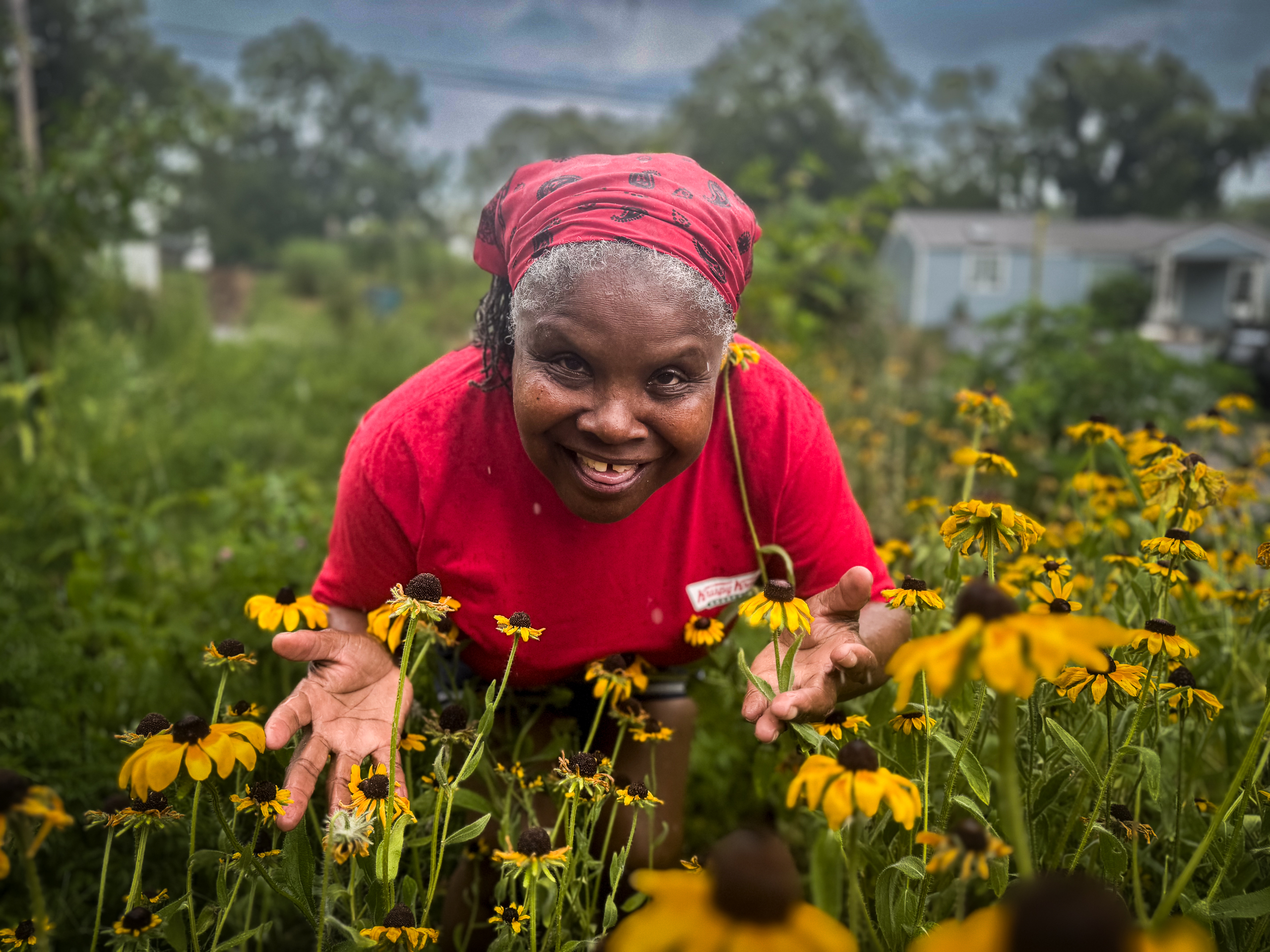
Nashvillian in Community Gardening
"I have never experienced this…ever. It’s like there used to be a shield where the sun gets through, but now…you feel like your blood is boiling. We have to be realistic; it’s too hot. The same sun, the same time or year, it’s threatening. [Being outside] it used to be joyful, but now it's... uncomfortable. Most little children do not be outside…ever.”
Climate Connection
As cities continue to grow, so does the intensity of the heat trapped within them. Concrete buildings, asphalt roads, and limited green space contribute to what's known as the urban heat island effect, where urban areas experience higher temperatures than surrounding rural areas.
Urban heat doesn't just make Nashville summers uncomfortable—it can have serious, long-term consequences, particularly for vulnerable populations who are already facing multiple layers of inequality. Many of the city’s most vulnerable residents live in areas close to heavy industry, busy highways, and overdeveloped spaces—places where the heat is often felt more intensely. Without enough green spaces or cooling resources like cooling shelters, and with pollution levels higher in these
areas, the health risks are much greater, too. Designing or revitalizing cities with greenspace like Brooklyn Heights Community is the most effective, long-term solution to combating the urban heat island effect.
This is a reality that Ms. Pearl knows all too well. The sweltering heat she describes is a growing struggle in her North Nashville neighborhood, and unfortunately, it’s not an isolated experience. As Nashville continues to expand, the effects of extreme heat on human health, well-being, and the environment are becoming even more urgent. For Nashville's marginalized communities, the rising temperatures aren't just an inconvenience—they're a real public health concern that demands our attention.
Additional Information
Nella “Ms Pearl” Frierson has been described as indomitable, a visionary, a community leader, and a Nashville icon with a purple aura to match. With her signature grin, Ms. Pearl would tell you she is a butterfly and a dancer. Having lived her entire life in North Nashville, she has witnessed her neighborhood’s evolution, contrasting the wonders of a tight-knit community with its trials and turns of violence. By trade, she is a reflexologist, life coach, and an urban farmer who founded Brooklyn Heights Community Garden. Creating the garden was Ms. Pearl’s response to a neighborhood tragedy, honoring the life of a young man who sought a safe space in the last years of his life. While her mother’s garden was renowned throughout North Nashville during its time, Ms. Pearl’s garden is a flash point for cultivating a healthy community through growing food, intergenerational play, and creative learning. Brooklyn Heights Garden calls all Nashvillians to simple actions to manifest a more resilient, just community: Honor the Land. Nurture People. Inspire Love.
Urban Heat Island Effect
The urban heat island effect is a growing concern for most municipalities nationwide. Buildings, roads, and other infrastructure absorb and hold onto heat from the sun much more than natural landscapes, like forests or bodies of water. In urban areas, where these manufactured structures are packed together, there’s less greenery, and temperatures tend to rise higher than in surrounding rural areas. This creates "heat islands"—areas where the temperature is significantly hotter than in nearby places. These heat islands can form under all kinds of conditions—whether it's day or night, big or small cities, suburban neighborhoods, or northern and southern climates. And they can happen in any season, not just during the summer.
Metro Nashville defines extreme heat as a period of 2-3 days exceeding 90 degrees of temperature. This municipal resource, Nashville Heat Impacts StoryMap, is a useful tool to identify communities within our city impacted the most by the urban heat island effect.
Why cities should care
The impacts of the urban heat island effect go beyond just the weather. They can affect nearly every part of city life. As temperatures rise, cities can expect higher healthcare costs, with emergency services and hospitals seeing more people for heat-related issues. Heat stress symptoms include nausea, irritability, heavy sweating, weakness, dizziness, headache, damps skin, and confusion. The heat also exacerbates pre-existing health conditions like respiratory or heart.
But the effects don't stop there. Daily quality of life is disrupted, too—heat can make it harder to work, commute, and just go about daily routines. Energy costs rise to keep up with the demand to cool down homes, schools, businesses, and public spaces. Public cooling centers must be included in municipal infrastructure budgets and constructed and maintained. Perhaps most concerning, heat amplifies existing social and economic inequalities. Vulnerable communities are hit the hardest and have the least resources to advocate for the changes they need.
Solutions
Urban Heat Island Mitigations fall under four main categories:
- Incorporating more greenspace and blue space or waterscapes into city design
- Protecting and integrating more urban tree canopy structures into the cityscape
- Remediating brownfields
- Innovating black asphalt production, cool roof with white painting, and cooling pavement technology
Extreme Heat: "Urban heat islands" occur when cities replace natural land cover with dense concentrations of pavement, buildings, and other surfaces that absorb and retain heat. This effect increases energy costs (e.g., for air conditioning), air pollution levels, and heat-related illness and mortality. - Reduce Urban Heat Island Effect | US EPA.
Extreme Heat Exposure: realized contact between a human and an indoor or outdoor environment in which the air temperature, radiative load, atmospheric moisture content, and air velocity collectively pose a risk of increase in body core temperature, perceived discomfort, or both.
Symptoms for Extreme Heat Exposure
- Confusion, altered mental status, slurred speech.
- Loss of consciousness (coma)
- Hot, dry skin or profuse sweating.
- Seizures.
- Very high body temperature.
- Fatal if treatment delayed.
Cooling Centers: an air-conditioned public or private space to temporarily deal with the adverse health effects of extreme heat weather conditions, like the ones caused by heat waves.- The Use of Cooling Centers to Prevent Heat-Related Illness: Summary of Evidence and Strategies for Implementation
Greenspaces: socially and ecologically valuable open spaces featuring tree canopy and vegetation within neighborhoods. They are generally city parks or walkways that encourage community, physical activity, and overall well-being. - US EPA epa.gov
Blue spaces: bodies of water, areas near bodies of water that include rivers, lakes, beaches, or incorporated water features like ponds and fountains. Blue spaces provide mental and physical health benefits. - US EPA epa.gov
Urban Tree Canopy: leafy, green, overhead cover from trees that community groups, residents, and local governments maintain in the landscape for beauty, shade, fruit production, wildlife habitat, and a host of public health, ecological services, and educational value. City trees, or tree canopy, soak up stormwater, provide cooling shade, and help to slow traffic. - Urban Tree Canopy Assessment, TDEC.gov
Brownfields: any property, the expansion, redevelopment, or reuse of which may be complicated by the presence or potential presence of a hazardous substance, pollutant, or contaminant. It is estimated that there are more than 450,000 classified brownfields in the U.S. Cleaning up and reinvesting in these properties increases local tax bases, facilitates job growth, utilizes existing infrastructure, takes development pressures off of undeveloped, open land, and both improves and protects the environment. -Overview of EPA Brownfields Program at epa.gov
Black Asphalt Innovations or Cooling Pavement Technology: There are many innovations to combat the effects of the built environment. One of those innovations is changing the color of asphalt to reduce the surrounding temperatures. Studies have found that residents enjoy colored pavements rather than the everyday black-and-white color of pavements. Light-colored asphalt made with resin or bitumen clear binder (adhesive that holds aggregates together to create a durable and smooth road surface) can be colored easily and reduce the visual and environmental impacts of the dark asphalt and how that causes the Urban Heat Island effect. The same principles can be applied to roof shingles and poured driveways. - US EPA epa.og, ASCE.org
The Nashville Rescue Mission: A local organization and one of the larger shelter facilities for the unhoused population citywide. To visit their website, click here.
Metro Social Services: A municipal branch that offers solutions for cold shelter and is charged with designing Nashville’s response to increasing extreme heat stressors. To visit their website, click here.
Extreme Heat
New Orleans, LA: Another comparable Southern metropolitan area is New Orleans that experiences more extreme humidity and heat stressors. Municipal services now include cooling centers while building out a robust network of NGO and private cooling center infrastructure to offer marginalized communities.
NCHH–National Center for Healthy Housing: A resource describing the measures each state is independently taking to address the level of climate driven extreme heat stressors the individual states face. - NCHH Cooling Centers By State
To access the transcript of the conversation with Ms. Pearl, click here.
- U.S. Environmental Protection Agency. (n.d.). Learn About Heat Islands. https://www.epa.gov/heatislands/learn-about-heat-islands.
- Due to the heat-absorbing built environment of urban areas, cities can be 1 to 7°F hotter than surrounding areas, a phenomenon known as the urban heat island effect. More information here about types of heat vulnerability.
- Wilson, B. (2020). Urban Heat Management and the Legacy of Redlining. Journal of the American Planning Association, 86(4): 443-457. DOI: 10.1080/01944363.2020.1759127.
- Within cities, heat exposure can vary in ways that map onto socioeconomic and racial differences, such as historically redlined areas.
- Hamstead, Z. A. (2023). Thermal insecurity: Violence of heat and cold in the urban climate refuge. Urban Studies, 0(0). https://doi.org/10.1177/00420980231184466
- Interview-based study exploring lived experiences with heat, coping strategies, personal impacts, etc. See the header "Thermal Lived Experiences" for the results of the analysis.
- This StoryMap is a great Nashville-specific explainer to include in the brief (with maps showing geographic disparities for exposure and heat vulnerability)
- The federal website Heat.gov describes demographics more vulnerable to heat.
- Grades of Heat
- Metro Homeless Impact Division Acronym Dictionary
Hear from Vicky Batcher
Nashvillian Who has Experienced Homelessness
"I think it's just going to come to a time when we won’t be able to predict the weather anymore. It seems to be colder longer and hotter quicker. You don’t have that week to prepare. Being homeless, you had a week to prepare… We need to be able to prepare…but now…There is no slow progress into the seasons. We don’t have time to prepare. Pretty soon, we’re not going to have a spring or autumn."
Climate Connection
Unhoused Nashvillians like Vicky, who live among the elements, are more attuned than most to the shifting climate. This community experiences these changes first, worst, and longest. Often, we associate climate changes with warmer temperatures but the outcomes of shifting climate are more varied and far-reaching.
Vicky’s experiences indicate a significant departure from climate patterns as we know them in Middle Tennessee. As she correctly predicts, our seasons are evolving into something manifestly new. Our ability to read these dramatic seasonal shifts directly impacts those living outdoors. These rapid pivots in our climate also test our city’s capacity to prepare for more dire consequences.
For folks like Vicky, we have moved away from communities that work in concert with the outdoor world rather than in spite of it. A better Nashville will require a return to a whole environmental approach to our city’s design and development.
Additional Information
Born a preacher’s daughter in the midwestern plains of Nebraska, Vicky has lived in many different places across the country. The needs of far-flung congregations meant that the family often moved for her father’s vocation. These frequent moves provided Vicky with a unique wealth of experience with different climates and cultures. As an adult, Vicky moved with her children to Nashville for work opportunities and has resided here for years. She has lived off and on in unhoused encampments while raising her family. Vicky currently resides in transitional housing at Hadley Park Towers. These experiences provided her with a perspective of seasonal living, communing in harmony with the land and the elements in order to better survive.
For Nashville’s unhoused populations, a shifting climate is an ever-present emergency. The Southeastern climate, generally characterized by temperate seasons, is evolving.
Warmer air can hold more moisture and warmer oceans provide more energy in the atmosphere. With more water and energy available in the atmosphere, our storms are becoming more erratic and extreme. The result is a dramatic and rapid evolution of long-standing patterns of weather, altering an area’s climate entirely.
More erratic fluctuations in weather conditions such as winter storms, more frequent cold snaps, or severe heat have an exponentially higher impact on unsheltered people already living outdoors. More frequent and severe weather events like tornadoes and flooding can destroy temporary shelters and disrupt stable housing. Severe weather can lead to a range of health risks, including hypothermia, heat stroke, frostbite, dehydration, respiratory issues, and increased vulnerability to illnesses due to lack of shelter and proper clothing, further exacerbating existing health conditions and potentially leading to death, particularly during extreme heat or cold events; homeless individuals are also more susceptible to the impacts of natural disasters These extremes herald a shift in how those who experience life in the elements must respond to their environment.
The extreme and lengthier cold and heat snaps come with a host of problems that threaten to spill over into different sectors of support services. There is a greater burden on transitional housing and overflow within temporary encampments. Social services that have continuums of care for chronic health problems like diabetes, exposure, mental health, and even addiction will be tested. These climate consequences will create community crises that threaten to stretch our overall healthcare services, energy grid, and housing sectors to their limits. Our city’s resilience will depend on our adaptability and timely response to these shifts.
Source: How Climate Change Impacts Homelessness - Apr 24, 2023
Extreme Heat: "Urban heat islands" occur when cities replace natural land cover with dense concentrations of pavement, buildings, and other surfaces that absorb and retain heat. This effect increases energy costs (e.g., for air conditioning), air pollution levels, and heat-related illness and mortality. - Reduce Urban Heat Island Effect | US EPA.
Extreme Heat Exposure: realized contact between a human and an indoor or outdoor environment in which the air temperature, radiative load, atmospheric moisture content, and air velocity collectively pose a risk of increase in body core temperature, perceived discomfort, or both.
Symptoms for Extreme Heat Exposure
- Confusion, altered mental status, slurred speech.
- Loss of consciousness (coma)
- Hot, dry skin or profuse sweating.
- Seizures.
- Very high body temperature.
- Fatal if treatment delayed.
Heat dome: is a weather phenomenon where a ridge of high pressure gets stuck in the atmosphere. It traps hot ocean air like a lid or cap on a boiling pot. Hot air expands vertically into the atmosphere and high pressure pushes it toward the ground.
What are symptoms of heat stress or heat stroke?
- Nausea
- Irritability
- Heavy sweating
- Weakness
- Dizziness
- Headache
- Confusion
- Damp skin
First Aid in the event of a Heat stroke: call 911 or go to the hospital immediately.
Cooling Centers: is an air-conditioned public or private space to temporarily deal with the adverse health effects of extreme heat weather conditions, like the ones caused by heat waves. - The Use of Cooling Centers to Prevent Heat-Related Illness: Summary of Evidence and Strategies for Implementation
Extreme Cold: Extreme Cold describes temperatures that are lower than historical averages to the point that it creates a dangerous environment for people, animals, and critical infrastructure. What constitutes as ‘extreme cold’ can vary across different areas of the country as some regions are less accustomed to winter weather and freezes.
Extreme Cold Exposure: The definition of extreme cold varies in different parts of the country due to local climate. Whenever temperatures drop dramatically below normal, staying warm and safe can become challenging. In general, your risk of health effects like windburn and frostbite increase at wind chill values below -27.
What are the signs and symptoms of hypothermia?
- Shivering.
- Exhaustion or feeling very tired.
- Confusion.
- Fumbling hands.
- Memory loss.
- Slurred speech.
- Drowsiness.
Warming Centers: A warming center is a short-term emergency shelter that operates when temperatures or a combination of precipitation, wind chill, wind and temperature become dangerously inclement. Their paramount purpose is the prevention of death and injury from exposure to the elements. Warming Centers give those who are vulnerable and may be experiencing homelessness a safe, warm indoor place to rest and access snacks, washroom facilities and referrals to emergency shelters.
The Nashville Rescue Mission: A local organization and one of the larger shelter facilities for the unhoused population citywide. To visit their website, click here.
Metro Social Services: A municipal branch that offers solutions for cold shelter and is charged with designing Nashville’s response to increasing extreme heat stressors. To visit their website, click here.
Extreme Cold
Washington DC: The Metro DC plan discusses the municipal Cold Emergency Plan and key services that activate when trigger temperatures are met. - Snow DC Warming Center Plan
Fayetteville, AR: A developing metropolis in the Arkansan Ozarks with a comparable climate, this plan outlines the public/private partnership to create the warming shelter infrastructure most smaller Southern municipalities lack. - Fayetteville, AR Cold Weather Sheltering
Extreme Heat
New Orleans, LA: Another comparable Southern metropolitan area is New Orleans that experiences more extreme humidity and heat stressors. Municipal services now include cooling centers while building out a robust network of NGO and private cooling center infrastructure to offer marginalized communities.
NCHH–National Center for Healthy Housing: A resource describing the measures each state is independently taking to address the level of climate driven extreme heat stressors the individual states face. - NCHH Cooling Centers By State
To access the transcript of the conversation with Vicky, click here.
- U.S. Environmental Protection Agency. (n.d.). Learn About Heat Islands. https://www.epa.gov/heatislands/learn-about-heat-islands.
- Due to the heat-absorbing built environment of urban areas, cities can be 1 to 7°F hotter than surrounding areas, a phenomenon known as the urban heat island effect. More information here about types of heat vulnerability.
- Wilson, B. (2020). Urban Heat Management and the Legacy of Redlining. Journal of the American Planning Association, 86(4): 443-457. DOI: 10.1080/01944363.2020.1759127.
- Within cities, heat exposure can vary in ways that map onto socioeconomic and racial differences, such as historically redlined areas.
- Hamstead, Z. A. (2023). Thermal insecurity: Violence of heat and cold in the urban climate refuge. Urban Studies, 0(0). https://doi.org/10.1177/00420980231184466
- Interview-based study exploring lived experiences with heat, coping strategies, personal impacts, etc. See the header "Thermal Lived Experiences" for the results of the analysis.
- This StoryMap is a great Nashville-specific explainer to include in the brief (with maps showing geographic disparities for exposure and heat vulnerability)
- The federal website Heat.gov describes demographics more vulnerable to heat.
- Grades of Heat
- Metro Homeless Impact Division Acronym Dictionary
Hear from David Wooten & Terri Masterson
Nashvillians in Transitional Housing
"People don't look at [climate change] though. They think of weather, they think of rain and snow. You know, when you say weather, that's what you think of, rain and snow. No, it's really dangerous. I mean, hurricanes have gotten so much worse. Tornadoes have got to where now they don't come in one or two, they come in three or four at a time. No, there wasn't as much flooding back then either. Back then it was unheard of. It just didn't happen near as much as it seems to happen today."
Climate Connection
David and Terri's experiences living in tent encampments in Middle Tennessee highlight the severe challenges of surviving extreme weather, particularly harsher winters among vulnerable populations. With increasingly extreme cold snaps and longer summers, the homeless community faces tough conditions that test their survival skills. For David, who uses a wheelchair, the cold is even more difficult to manage, making it harder for both him and Terri to stay safe and warm. Despite these struggles, David and Terri along with others in the homeless community, demonstrate remarkable resilience, adapting to the harsh conditions with resourcefulness and adaptive strategies.
David and Terri's story shows how people can adapt to changes in the climate across the board, even in industries like construction. With decades of experience as a framer before his disability, David has seen how construction techniques have had to evolve to withstand stronger storms and more extreme weather, such as tornadoes and floods. In response, building codes and methods in Middle Tennessee will have to adapt quickly to meet the need. However, making these changes comes with higher costs for resilient construction materials, the need for a labor force skilled in adaptive building practices, and updates to Nashville codes and permits. All of which local businesses and decision-makers will have to contend with to forge a sustainable solution
Additional Information
BIO: For David Wooten and Terri Masterson, East Nashville has always been home. They are no strangers to the dramatic social, economic, and climate changes their neighborhood has experienced. Over the past sixty years, they have reckoned with them all. With fortitude and hope, they have endured personal rises and falls in equal measure, finding strength in each other. Both born and raised in Madison, Tennessee, David Wooten and Terri Masterson’s childhoods were shaped by the familiar experiences of a working-class neighborhood, where community ties and hard work were central to daily life. You can almost hear a mischievous wink as David and Terri recount their tales from a nearly forgotten East Nashville– one with teenage antics at the bicentennial Fourth of July celebrations and Hermitage Shores, cruising Rivergate Mall in souped up hotrods, and drag racing on Gallatin Pike. As adults, they raised families and worked hard building careers in construction and cosmetology, all the while contending with a rapidly transforming city from the one they knew. Through personal ups and downs, David and Terri’s journey reflects the larger changes in East Nashville, capturing the spirit of endurance and grace that has defined their lives.
The connection between extreme cold and heat disproportionately affecting unhoused individuals and unhoused communities is well documented.
Extreme cold refers to temperatures that fall far below historical averages, creating dangerous conditions for people, animals, and infrastructure. The federal definition of "extreme cold" can vary depending on the region, as some areas are less accustomed to harsh winter weather. In general, when temperatures drop significantly below normal, staying warm and safe becomes difficult. Wind chill values below -27°F increase the risk of health issues like frostbite and windburn.
Nashville considers extreme cold to be temperatures at or below 32°F for three hours in a row. When this happens, the Metro shelter opens for extra space for the homeless. The decision to open is made by noon the day before, based on the weather forecast. The shelter operates from November 1 to March 31 each year.
Significant, negative health outcomes can arise from exposure to extreme cold weather conditions over extended periods of time. The most common being hypothermia. Hypothermia can set in during extreme winter conditions, with symptoms including shivering, exhaustion, confusion, memory loss, slurred speech, and drowsiness. To protect vulnerable individuals, especially those without shelter, warming centers are set up during extreme cold events. These temporary shelters provide a safe, warm space to rest, access snacks, use washroom facilities, and receive referrals to emergency shelters, all aimed at preventing injury or death from exposure to the elements.
Other health issues that persist in extreme cold conditions include pre-existing conditions and disabilities, which can worsen when living in temporary shelter.
The stress and anxiety of survival in extreme cold weather events can also exert extreme pressures on already taxed mental health for the unhoused.
Adaptive strategies are designed to meet these specific needs, and once deployed ensure overall resiliency. Adaptive strategies can range from personal survival skills to building and zoning codes to weatherization programs.
Adaptive Strategies: possible ways individuals and communities can address anticipated, current, and future climate threats to public health. These strategies use a five-step process from the Centers for Disease Control and Prevention’s (CDC) Building Resilience Against Climate Effects (BRACE) program that allows health officials to develop strategies and programs to help communities prepare for the health effects of climate change.
Derecho: a severe and widespread windstorm that is characterized by straight-line winds over a large area. Unlike tornadoes, which are rotating columns of air, derechos have straight-line winds that can be extremely powerful and cause significant damage. Derechos typically form along the boundary between hot, dry air masses and cool, moist air masses. The contrast between these air masses creates instability in the atmosphere. When a strong weather system, such as a low-pressure system, moves through the area, it can cause the development of a derecho.
Extreme Cold: Extreme Cold describes temperatures that are lower than historical averages to the point that it creates a dangerous environment for people, animals, and critical infrastructure. What constitutes ‘extreme cold’ can vary across different areas of the country as some regions are less accustomed to winter weather and freezes.
Extreme Cold Exposure: The definition of extreme cold varies in different parts of the country due to local climate. Whenever temperatures drop dramatically below normal, staying warm and safe can become challenging. In general, your risk of health effects like windburn and frostbite increase at wind chill values below -27. Oct 19, 2021
Signs and symptoms of hypothermia
- Shivering.
- Exhaustion or feeling very tired.
- Confusion.
- Fumbling hands.
- Memory loss.
- Slurred speech.
- Drowsiness.
Tornado: severe weather event that forms when there's a clash between warm, moist air and cool, dry air. This clash creates a rotating column of air. When this rotating air meets a thunderstorm, it can be pulled into a tornado. The swirling motion is what makes it look like a massive funnel. These winds can reach mind-boggling speeds, making it one of Earth's most powerful wind events.
Warming Centers: A warming center is a short-term emergency shelter that operates when temperatures or a combination of precipitation, wind chill, wind, and temperature become dangerously inclement. Their paramount purpose is the prevention of death and injury from exposure to the elements. Warming Centers give those who are vulnerable and may be experiencing homelessness a safe, warm indoor place to rest and access snacks, washroom facilities, and referrals to emergency shelters.
Extreme Cold
Washington DC
Metro DC plan discusses the municipal Cold Emergency Plan and key services that activate when trigger temperatures are met.
Snow DC Warming Center Plan
Fayetteville, AR
A developing metropolis in the Arkansan Ozarks with a comparable climate, this plan outlines the public/private partnership to create the warming shelter infrastructure most smaller Southern municipalities lack.
Fayetteville, AR Cold Weather Sheltering
To access the transcript of the conversation with David & Terri, click here.
- Interview-based study exploring lived experiences with heat, coping strategies, personal impacts, etc. See the header "Thermal Lived Experiences" for the results of the analysis.
Hear from Tom Kunesh
Middle Tennessean Sharing Indigenous Wisdom
Maybe it’s kids that are growing up near creeks and rivers, that'll save us. Parents who bring their kids to creeks and rivers and lakes treasure animals. But the biggest thing is, the change in the number of animals. How people look at animals–we even have less contact where when I grew up, where I grew up, people had constant contact with animals.
Climate Connection
Tom’s story is a meditation on the greater culture of care for the earth, resources, ourselves. Far from a novel idea, indigenous groups have been long touting this simple truth: we are not separate from the natural world—we’re stitched into it. Somewhere along the way, that truth got buried beneath concrete and convenience. We began to think of nature as something "out there"—a destination or a backdrop, rather than the very system that sustains our lungs, our food, our quietest joys. But the forests we clear, the rivers we dam, the species we lose—they are not external tragedies. They are personal losses, whether we choose to feel them or not.
Our reconnection starts with presence, education. When we introduce ourselves, our children to the natural world starting with something as simple as a creek. When we let them watch tadpoles dance in the shallows, we’re doing more than entertaining them—we’re building a future steward. When we grow a garden, or walk slowly through a patch of woods, or even pause to watch the wind moving through trees, we’re letting nature teach us how to slow down, how to listen, how to belong. These simple acts don’t just nourish the earth; they heal something inside us, too.
The climate crisis is not only a crisis of shifting climate—it’s a crisis of relationship. Indigenous cultures across the planet call for a return to our roots. We have forgotten that we’re part of a larger web, and that web is fraying. More than policies and pledges, what’s needed is a cultural shift—a remembering. Indigenous knowledge has long held that the earth is kin, not commodity. Modern science is catching up, but what we need most now is collective humility, and a return to care. Real change will come not just from innovation, but from intimacy—with land, with water, with all living things.
Additional Information
The hundred lives of Tom Kunesh, that’s what they call it. Tom has seen many corners of this world and can tell you a thing or two about crayfish and crows. Tom grew up in a small, picture-perfect Midwestern town in Minnesota, the kind that could’ve been pulled straight from Garrison Keillor’s “Lake Wobegon.” He comes from a big family of 13 siblings—including two sets of twins—and is descended from the Lakota Nation on his mother’s side. Whether it’s his world travels in the Navy, the teachings of his ancestors, his admiration for environmental pioneer Rachel Carson, or simply the perspective that comes with age (he proudly calls himself a “boomer”), Tom carries with him a quiet, steady wisdom that feels both timeless and deeply grounded. A passionate, lifelong advocate for Native American voices and values, Tom speaks to an evolving world that often feels out of sync—a planet in conflict with the relentless pace of human development and the delicate balance of ecosystems shared with countless other species. He charts the decline and return of these creatures across the globe and sees our growing disconnection from the natural world as a clear sign of that imbalance. But like any good storyteller, Tom reminds us that we are the heroes of this moment. That we need only to wake from the spell of indifference to save and reset the balance in our world.
Impacts of Climate Change, Human Development, and Disconnection on Ecosystems
Climate change is amplifying the strain on ecosystems worldwide by altering the very conditions that species rely on for survival. Rising global temperatures, shifts in precipitation patterns, and more frequent extreme weather events are pushing ecosystems beyond their natural capacity to adapt. Species are being forced to migrate to new areas, while others find themselves unable to keep pace with these rapid changes. The Environmental Protection Agency (EPA) explains that warming temperatures are altering habitats, affecting migration patterns, and disrupting breeding seasons, leading to imbalances in the ecosystems that support us all (EPA, 2021). These changes threaten vital ecological services such as pollination, soil health, and water purification—services essential for both wildlife and human well-being. The combined impacts of climate change, habitat loss, and pollution are driving many species toward extinction, with current rates of biodiversity loss much higher than what would naturally occur (EPA, 2021).
Human development, particularly through deforestation, urbanization, and industrial agriculture, has further accelerated these threats. As cities expand and agricultural practices intensify, habitats are destroyed or fragmented, leaving species with fewer spaces to thrive. This disruption is compounded by the overexploitation of resources, pollution, and the introduction of invasive species, which further strain ecosystems. According to the EPA, human activities such as these are a primary driver of biodiversity loss, directly contributing to the decline of species across the globe. The ongoing pressure on ecosystems intensifies the challenge of maintaining biodiversity and ecosystem health, ultimately destabilizing food chains and ecological balance (EPA, 2021).
In addition to these environmental pressures, a growing disconnection between humans and nature is making it harder to address the crisis. Urbanization and technological advances have distanced many people from the natural world, reducing their understanding of and engagement with the environment. This disconnection weakens public support for conservation efforts and hinders the broader movement to tackle sustainability challenges. The United Nations stresses that rebuilding our relationship with nature—through education, hands-on experiences, and active conservation—is critical for reversing the degradation of ecosystems (United Nations, 2020). As we face an increasingly uncertain future, reconnecting with the natural world and mitigating the effects of climate change are essential steps toward safeguarding biodiversity and ensuring the health of ecosystems for future generations.
Solutions
- Habitat Restoration and Protection
One of the most direct ways to combat climate change's impact on ecosystems is through the restoration and protection of natural habitats. Restoring wetlands, forests, grasslands, and coral reefs helps stabilize ecosystems and increases their resilience to climate change. These areas provide essential services such as carbon sequestration, water filtration, and biodiversity support. The U.S. Environmental Protection Agency (EPA) highlights the importance of protecting natural habitats, especially those that serve as carbon sinks like wetlands and forests, which can help absorb excess carbon dioxide from the atmosphere (EPA, 2021).
- Sustainable Land Use and Agriculture
Transitioning to sustainable land-use practices is essential for reducing the negative impacts of human development. This includes promoting regenerative agriculture, reforestation, agroforestry, and sustainable forestry management. Sustainable agricultural practices help maintain soil health, preserve water quality, and reduce the environmental footprint of food production. Shifting away from practices that contribute to deforestation and land degradation can help safeguard critical habitats and protect the species that depend on them.
- Mitigation and Adaptation Strategies for Wildlife
Wildlife corridors—protected pathways that allow species to migrate safely in response to climate changes—are crucial for helping animals adapt to shifting habitats. Establishing these corridors can help mitigate the impacts of fragmented landscapes caused by urbanization and agriculture. Additionally, targeted conservation efforts, such as assisted migration (moving species to more suitable habitats) or captive breeding programs, can help preserve vulnerable species threatened by climate shifts.
- Pollution Reduction and Clean Energy Transition
Reducing air, water, and land pollution is key to reducing the stress on ecosystems. Transitioning to clean, renewable energy sources such as solar, wind, and hydropower reduces greenhouse gas emissions and helps slow the pace of climate change. The EPA has stressed that policies and initiatives to cut down on pollutants like nitrogen and sulfur from industrial sources can directly improve air and water quality, benefiting both human and ecological health.
- Enhanced Climate Education and Public Engagement
Increasing public awareness about the importance of ecosystems and their role in climate regulation is essential for building broader support for conservation initiatives. Programs that encourage community-based action, local conservation efforts, and sustainable practices—such as tree planting or waste reduction—can have a significant impact. The United Nations emphasizes the need for education systems to teach climate change and ecosystem science to future generations to ensure a more sustainable relationship with the planet (United Nations, 2020).
- Strengthening International Agreements and Policies
On a larger scale, international cooperation is crucial to addressing the global nature of climate change and its impact on ecosystems. Strengthening agreements such as the Paris Agreement and ensuring compliance with global sustainability goals is vital for mitigating the long-term effects on biodiversity. Supporting policies that incentivize ecosystem conservation, such as carbon trading systems and biodiversity protection agreements, can help curb the loss of critical habitats.
- Promoting Biodiversity Conservation
Focusing on biodiversity conservation through the creation of protected areas, national parks, and marine sanctuaries can help maintain species populations and safeguard ecosystems from further degradation. By ensuring that ecosystems remain intact, we not only preserve wildlife but also protect the critical services ecosystems provide, such as regulating the climate, purifying water, and supporting agricultural productivity.
Definitions
Agroforestry: A land-use management system that integrates trees, crops, and livestock in a way that enhances biodiversity, soil health, and overall ecosystem stability. It helps restore degraded land and provides additional income for farmers while benefiting the environment.
Food and Agriculture Organization (FAO) - Agroforestry
Biodiversity: The variety of life forms on Earth, including species diversity, genetic diversity, and ecosystem diversity. Biodiversity is essential for ecosystem health, resilience, and the provision of services like pollination, water purification, and climate regulation.
United Nations - Biodiversity
Carbon Sequestration: The process of capturing and storing atmospheric carbon dioxide (CO2) in natural systems, such as forests, wetlands, or soils, to reduce the concentration of CO2 in the atmosphere and mitigate climate change.
U.S. Environmental Protection Agency (EPA) - Carbon Sequestration
Climate Mitigation: Actions taken to reduce or prevent the release of greenhouse gases into the atmosphere, aiming to slow the rate of climate change. Mitigation strategies include transitioning to renewable energy, increasing energy efficiency, and protecting carbon sinks like forests. Climate Change 2022: Mitigation of Climate Change
Greenhouse Gases (GHGs): Gases in Earth's atmosphere that trap heat, contributing to global warming and climate change. The most common greenhouse gases are carbon dioxide (CO2), methane (CH4), and nitrous oxide (N2O). U.S. Environmental Protection Agency (EPA) - Greenhouse Gas Emissions
Marine Sanctuaries: Protected areas in the ocean where human activities, such as fishing, mining, or tourism, are restricted to conserve marine life and ecosystems. These sanctuaries help restore biodiversity and provide safe habitats for marine species. Marine Protected Areas | Office of National Marine Sanctuaries
Pollution Reduction: Efforts to decrease the levels of harmful substances (such as chemicals, plastics, and greenhouse gases) released into the air, water, and soil. Reducing pollution helps protect ecosystems, species, and human health.
U.S. Environmental Protection Agency (EPA) - Pollution Prevention
Regenerative Agriculture: An approach to farming that emphasizes restoring soil health, increasing biodiversity, and improving the water cycle. Practices include crop rotation, no-till farming, and using organic methods to rebuild soil and sequester carbon.
Regenerative Agriculture Initiative
Regenerative Ecosystem: An ecosystem that is restored or maintained through practices that enhance its natural capacity to regenerate and recover. This includes increasing biodiversity, restoring soil health, and promoting sustainable land use.
Source: Regeneration International
Wildlife Corridors: Protected or natural pathways that allow wildlife to safely migrate between fragmented habitats. These corridors help species adapt to climate change by providing access to new habitats, food, and breeding sites. Why connectivity matters to wildlife—and people | Stories
Civic Design Center
A local organization that advocates for civic design vision and actionable change in communities to improve quality of life for all.
https://www.civicdesigncenter.org/
Metro Water Management
Clean Water Nashville is an initiative set by the Metro Water Management to better ensure water resource integrity through low impact development standards.
https://www.cleanwaternashville.org/nashville-green-infrastructure
Harpeth River Conservancy
Grassroots non-profit organization formed in 2000 to protect and promote river health and wetland integrity in the Harpeth River watershed.
https://harpethconservancy.org/
E3 Innovate
A Nashville-based team of building science and high performance home specialists dedicated to home improvements that improve the quality and efficiency of homes
www.e3innovate.com
Resilient Communities
Portland, OR
Long a bastion of balanced human development and biodiverse-rich natural ecosystems, this Pacific Northwestern capital mainstreams nature-based solutions into its city planning and built environment projects. A comprehensive review of the environmental benefits of urban green spaces - ScienceDirect.
Milwaukee, Wisconsin
This mid-sized Midwestern city has put focal efforts on restoring and expanding its natural areas within municipal limits, including wetlands and green and blue spaces, bioswales, to enhance water quality, reduce flooding, and provide habitats for native wildlife and traditional species migrations paths. Three Innovative ICLEI USA Cities Utilizing Nature-Based Solutions.
Fort Collins, Colorado
This smaller municipality packs a big punch when it comes to sustainable land management practices including water conservation, soil health improvement, and sustainable agriculture, to support local food systems and reduce the environmental impact of non-regenerative agriculture practices.
To access the transcript of the conversation with Tom, click here.
Hear from Gilberto Martinez
Nashvillian Working Outside
"Who said a weed is a weed?
Let things naturally grow. We don’t have to plant new things. Let pollinators do their thing. Starting being ok with letting things grow, letting things be. Let your ecosystem thrive."
Climate Connection
As a landscaper working across Middle Tennessee, Gil has witnessed how the region’s weather has become increasingly unpredictable and extreme. Climate shifts ranging from sudden cold snaps in spring and extended summer droughts are no longer rare occurrences but recurring challenges that directly impact not only the timing of planting but can also affect the health of Gil’s crew due to extremes in heat and cold during installations.
In response, Gil has turned to a climate-smart landscaping approach promoting the use of native plants—species that have evolved alongside the region’s climate and wildlife. He believes this solution will not only improve the survival of the plants he installs, but he knows this will help address the growing challenges extreme weather shifts create for all living organisms within a habitat. These native plants are naturally adapted to local rainfall patterns, soil types, and temperature fluctuations, making them more resilient to both drought and freeze events. According to the U.S. Environmental Protection Agency (EPA), native landscaping not only requires less irrigation and chemical input, but also supports pollinators and birds, contributing to healthier overall urban ecosystems. Additionally, deeper root systems in native species provide extra ecological services. Native plants can most effectively manage stormwater runoff, reduce erosion, and cool the air—natural solutions to urban environmental challenges.
For Gilberto, landscaping is more than curb appeal—it’s about building biodiverse, resilient ecosystems one yard at a time. In his work, he encourages clients to think beyond aesthetics and toward sustainability: converting traditional lawns into pollinator havens, replacing invasive ornamentals with climate-hardy natives, and incorporating design elements that reduce runoff and heat retention caused by overly concrete areas and urban heat island effect. These small but intentional changes have a cumulative impact, offering a grassroots path to environmental resilience. As cities like Nashville continue to grow and face mounting climate pressures, Gilberto sees native plant landscaping as a practical and hopeful tool for rebalancing the relationship between people, nature, and place.
Additional Information
Gilberto Martinez is one thoughtful man. His calm and deliberate manner cannot hide his undeniable zest for life that shines through in the way he shows up—for his family, his community, and the land he works with. “Gil” has called Nashville home since 2000, when at the age of five his family moved to Middle Tennessee and began building a life rooted in community. Care for the environment was an organic lesson he picked up from his father who started out in the recycling industry. The oldest of three siblings, he grew up as an immigrant learning to navigate both challenges and opportunities with resilience and humor. Now married to Sofia and still deeply connected to family, Gilberto finds joy in quiet moments—good food, conversations with grandparents, music—and in watching the people and city he loves grow.
As the owner of a landscaping and outdoor living company, Gilberto is passionate about designing spaces that reflect the beauty of Middle Tennessee’s native plants while promoting sustainable practices that are accessible to everyone. What began as a way to pay college tuition has grown into a career rooted in environmental stewardship and equity. He believes everyone deserves access to green, thriving spaces—no matter their zip code—and works to make sustainability a shared value, not a luxury. Inspired by his mother’s generosity and the strength of his community, Gilberto hopes Nashville will continue to grow thoughtfully, investing in both people and the natural world that sustains them.
Incorporating native plants into landscaping is a sustainable practice that offers numerous environmental and economic benefits. Native plants are adapted to local climates and soils, requiring less water, fertilizer, and pesticides compared to non-native species. This adaptability leads to reduced maintenance costs and supports biodiversity by providing habitat and food for local wildlife. For instance, native plants' deep root systems help prevent soil erosion and improve water infiltration, which is crucial for managing stormwater runoff and protecting water quality. Perkiomen Watershed Conservancy+1Chester County Planning Commission+1
The U.S. Environmental Protection Agency (EPA) promotes the use of green infrastructure, including native plant landscaping, to enhance urban resilience against climate change. Green infrastructure practices, such as rain gardens and vegetated swales, utilize native plants to manage stormwater, reduce urban heat islands, and improve air quality. These approaches not only mitigate environmental impacts but also create aesthetically pleasing and functional green spaces in urban areas. US EPA
By integrating native plants into landscaping, communities can foster sustainable environments that support ecological health, reduce maintenance costs, and enhance the quality of life for residents. This practice aligns with broader efforts to create resilient and equitable urban landscapes that benefit both people and the planet.
Solutions
Actions and benefits of incorporating native plants into the built environment
-
Replace Traditional Lawns with Native Groundcovers
Swap thirsty grass lawns for native groundcovers like Phlox subulata or Carex species to reduce water use, limit mowing, and improve soil health.
-
Design Pollinator Gardens
Plant native wildflowers such as Echinacea, Milkweed, and Black-eyed Susan to support bees, butterflies, and other pollinators essential to local food systems and biodiversity.
-
Use Native Trees and Shrubs for Shade and Cooling
Species like Eastern Redbud and Serviceberry offer seasonal interest, habitat for birds, and help lower urban temperatures by providing natural shade.
-
Incorporate Rain Gardens with Native Plants
Build shallow, planted basins using native species like Swamp Milkweed or Blue Flag Iris to capture and filter stormwater runoff, reducing flooding and water pollution.
-
Avoid Invasive Species and Prioritize Local Plant Sources
Choose plants sourced from local nurseries and avoid invasive exotics to maintain regional ecological balance and improve survival rates in native soils and climate.
Definitions
Biodiversity: The variety of plant and animal life in a particular habitat. In urban settings, enhancing biodiversity through native plantings supports ecosystem stability and resilience. Native plants provide essential habitats for pollinators and other wildlife. Incorporating native species into urban landscapes can help restore and maintain biodiversity in cities.
Carbon Sequestration: The process of capturing and storing atmospheric carbon dioxide. Native plants, with their extensive root systems, play a significant role in reducing greenhouse gas concentrations by storing carbon in plant biomass and soil. This contributes to mitigating climate change impacts.
Ecosystem Services: The benefits that humans receive from the environment, such as clean air, water, and fertile soil. Native plants contribute to these services by supporting biodiversity, improving air and water quality, and enhancing soil health. They also aid in pollination, pest control, and nutrient cycling. US EPA
Green Infrastructure: A network of natural and semi-natural features, green spaces, and other environmental assets that provide services like stormwater management, air purification, and temperature regulation. Incorporating native plants into green infrastructure enhances these benefits. Examples include rain gardens, green roofs, and permeable pavements. US EPA
Invasive Species: Non-native plants that, when introduced to a new environment, can cause harm to the local ecosystem by outcompeting native species, disrupting food webs, and altering habitats. Avoiding invasive species is crucial in promoting healthy urban ecosystems.
Native Plants: Plants that have evolved over thousands of years in a particular region and are adapted to the local climate, soil, and wildlife. They require fewer resources like water and fertilizers and provide habitat and food for local wildlife. Using native plants in landscaping supports ecological balance and sustainability. US EPA
7. Pollinator Habitat: Areas that provide resources such as food, shelter, and nesting sites for pollinators like bees, butterflies, and birds. Native plants are essential in creating and maintaining these habitats, which are vital for the reproduction of many plants and the production of fruits and seeds. US EPA
Rain Gardens: Shallow, vegetated depressions designed to capture and absorb stormwater runoff from impervious surfaces like roofs and pavements. Incorporating native plants into rain gardens enhances their effectiveness by improving water infiltration and providing habitat for wildlife.
Stormwater Management: The practice of controlling and utilizing rainwater runoff to prevent flooding, erosion, and water pollution. Native plants play a key role in stormwater management by slowing down and filtering runoff, reducing the burden on urban drainage systems. US EPA
Urban Heat Island Effect: The phenomenon where urban areas experience higher temperatures than their rural surroundings due to human activities and modification of land surfaces. Native vegetation can mitigate this effect by providing shade and cooling through evapotranspiration.
Water Conservation: The practice of using water efficiently to reduce unnecessary water usage. Native plants typically require less water than non-native species, making them an effective choice for conserving water resources in urban landscapes.
Wildlife Habitat: Areas that provide the necessary resources for wildlife to live, feed, and reproduce. Native plants support wildlife habitat by offering food sources, shelter, and nesting sites for various species, thereby promoting biodiversity. US EPA
Neighbors for Native Plants
Local organization dedicated to educating and promoting through native plant growth and installation in lawns and backyard landscaping.
https://www.neighbors4nativeplants.org/
Root Nashville
An initiative catalyzed by local NGO, Cumberland River Compact, encouraging native urban tree canopy renewal projects and plantings throughout the city of Nashville to address the economic and health strains of urban heat island effects.
https://rootnashville.org/
Tennessee Native Garden Society
This volunteer society aids in planting natives into residential yards, school, business, or organizational planting believing for many who start on the road to sustainable landscaping and gardening it is easier to start small and grow over time.
https://tnps.org/native-gardens/
Wild Ones of Middle Tennessee
This local chapter of the greater national native plant movement is a dedicated educational resource for Nashvillians and surrounding communities promoting the use of natives plantings for sustainable gardening practices.
https://middletennessee.wildones.org/
Dublin, OH
This small metropolitan area emphasizes native plants in its parks and gardens, setting a citywide goal for at least 50% native plants in its built environment and landscapes. The city also actively educates residents on the benefits of native plants and pollinators through a host of municipal led programming.
Dublin Native Plants – City of Dublin, Ohio, USA
New Orleans, LA
A peer sister city to Nashville, New Orleans is using green infrastructure, including native plants to its 9a/9b planting zone. These investments in native plantings not only enhance the lush greenscapes of the Crescent City, but also improve resilience to historic flood plains, overall air quality, and water filtration. The city has worked tirelessly to create equitable access to these native plants and nature-centered places for all of its urban residents.
How Nature-Based Solutions and Green Infrastructure are Helping Cities Meet Their Climate Action Goals.
Denver, CO
This western capital has been working to actively replace water-intensive transplants, like bluegrass turf, with native plants around the City and County building and in surrounding park systems. The initiative aims to reduce water consumption, support pollinators, and create a more resilient urban ecosystem.
6 Cities Lighting Up the HNP Biodiversity Map - Homegrown National Park
To access the transcript of the conversation with Gilberto, click here.
Hear from Venessa Hammerick & Arthur McQuiston
Nashvillians Living Outside
On preparing for and experiencing more frequent, severe flooding in the encampments:
“When the water gets past them stakes, you better get, because this will all be underwater in a matter of minutes.”
Climate Connection
Flooding events are becoming more frequent and severe due to climate change, and for the unhoused or those transitioning to shelter, the consequences can be devastating. Unlike those with stable housing, unhoused individuals often live in areas highly susceptible to flooding—such as underpasses, riverbanks, or abandoned lots—without access to proper shelter or early warning systems. When floods hit, as we heard from Mama V and Arthur, folks can lose everything: their few belongings, access to medical supplies, and even their lives. Emergency services may not always prioritize homeless populations, and relocation to shelters—if available—can be chaotic and dangerous, especially for those already dealing with physical or mental health challenges.
As we hear about the harrowing events of the recent floods from Mama V and Arthur’s perspective, the immediate dangers of living with these
The environmental fallout from flooding compounds these hardships. Standing water can lead to outbreaks of waterborne diseases, mold growth, and increased exposure to toxins, especially in urban areas where runoff includes oil, sewage, and industrial waste. Many unhoused people lack access to clean water and sanitation facilities, putting them at even higher risk of illness in the aftermath. On top of that, support systems like outreach programs, soup kitchens, or mobile clinics are often disrupted or damaged by floods. In this way, the environmental impacts of flooding don’t just affect infrastructure—they also deepen the vulnerability and marginalization of people experiencing homelessness.
Flooding doesn’t just bring immediate danger—it also makes life a whole lot harder for people without stable housing. When sanitation systems break down, you get dirty water everywhere, mold starts to grow, and diseases like hepatitis A or leptospirosis can spread fast. On top of that, the places where unhoused folks usually get support—like food pantries, outreach spots, or mobile health clinics—can get shut down or wiped out by the storm. That means even fewer resources when they’re needed most.
And it’s not just about losing stuff or getting sick—floods can also push people out of the few places they’ve managed to settle, often leading to stricter rules or heavier policing around encampments. Cities trying to clean up after a disaster sometimes end up pushing people further into the margins instead of helping them. So when the waters rise, it’s not just a weather event—it’s another hit in a system that’s already stacked against folks trying to survive without a home.
Additional Information
Originally from the coal country of West Virginia, Venessa Hammerick—known affectionately by many as “Mama V”—grew up in a large family of six siblings. Her daddy worked the coal mines and her mom stayed at home to raise the kids. Her family is no stranger to life’s hardships. Despite the trials, family remains a central pillar of her life. She is a keen champion of all living things, especially her dogs. Mama V came to Tennessee at age 17 as a young mother. She has spent decades navigating work and care of her children through the instability of transitional housing.
Like her uncle, Arthur McQuiston, Mama V has noticed the trend in Tennessee’s shift towards “bipolar weather” that directly impacts their shared unhoused encampment. There is an inherent compassion and fortitude to Arthur, a native Nashvillian, who experienced prolonged bouts of PTSD after serving in Vietnam. Since returning from his tour of duty, Arthur has resided in Tent City since 1972. Currently, Mama V resides in a camper at this encampment adjacent to the Cumberland River. Experiencing homelessness has brought trials but also community. Mama V and Arthur have each faced chronic health issues, struggled to help neighbors and friends who are living with addiction, and endured the constant dangers of living among the increasingly erratic elements. Yet through it all, both continue to persevere with remarkable resilience. Mama V and Arthur are fighters, survivors in every sense—guided by a fierce will to keep going, no matter the odds.
Flooding in the United States is becoming more frequent and severe due to climate change, posing significant risks to communities nationwide. The Environmental Protection Agency (EPA) reports that nearly every coastal site measured has experienced an increase in coastal flooding since the 1950s, with the rate accelerating in many locations along the East and Gulf Coasts. For instance, Wilmington, North Carolina, now experiences an average of 49 flood days per year, a tenfold increase from the 1950s. This trend is attributed to rising sea levels, which reduce the gap between average sea level and the height of the land, leading to more frequent flooding even during minor high tides .US EPA+1US EPA+1
The impacts of flooding are disproportionately felt by marginalized communities, who are often less equipped to prepare for and recover from such events. An EPA analysis highlights that Black and African American individuals are more likely to live in areas with the highest projected increases in extreme temperature-related deaths and childhood asthma diagnoses. Similarly, Hispanic and Latino individuals are more likely to reside in areas with significant reductions in labor hours due to extreme temperatures and increased traffic delays from coastal flooding . These communities also face challenges from overwhelmed stormwater systems, which can lead to untreated sewage discharges into waterways, posing health risks and further exacerbating environmental injustices .US EPAUS EPA
In response, the EPA collaborates with local, state, and tribal governments to enhance resilience against flooding through improved infrastructure and community preparedness initiatives. However, the agency's capacity to support these efforts has been hindered by the removal of critical climate and environmental justice data tools, which were previously instrumental in identifying vulnerable communities and guiding equitable climate action. Restoring these resources is essential for informed decision-making and ensuring that all communities can effectively adapt to the increasing threat of flooding.The Guardian
Solutions
- Green Infrastructure
- Stormwater capture and reuse:
Implementing green infrastructure like rain gardens, green roofs, and permeable pavements can help absorb and store rainwater, reducing runoff and easing the burden on stormwater systems.
- Aquifer recharge:
Infiltrating captured stormwater into the ground can replenish groundwater supplies and reduce the need for traditional flood control measures, according to the EPA.
- Floodplain management:
Preserving natural floodplains and wetlands can help reduce flood damage by allowing floodwaters to spread out and dissipate, says the EPA.
- Nature-based solutions:
Utilizing natural processes like tree planting and wetland creation to slow down water flow and reduce flooding, as explained by GOV.UK blogs.
- Stormwater Management
- Reducing runoff:
Implementing practices like green roofs, permeable pavements, and bioretention areas can help reduce the amount of stormwater that flows into storm drains, according to the EPA.
- Improving water quality:
Green infrastructure can also help remove pollutants from stormwater runoff, improving water quality in receiving streams and rivers.
- Localized flood management:
Green infrastructure can help manage localized or "neighborhood" floods by absorbing rainfall and preventing water from overwhelming pipe networks.
- Other EPA Actions:
- Flood-proofing structures:
The EPA recommends elevating utilities, installing check valves, and sealing basements to prevent flood damage.
Coastal restoration plans:
Protecting coastal ecosystems like mangroves and wetlands can help buffer against storm surge and sea-level rise, according to the EPA.
Guidance on flooded homes:
The EPA provides guidance on cleaning up flooded homes, including removing standing water, disinfected surfaces, and drying everything out, as noted by the EPA.
Hazard mitigation assistance programs:
The EPA offers funding and support to water and wastewater utilities to help them prepare for and adapt to floods, according to the EPA.
Flooding in the United States is becoming more frequent and severe due to climate change, posing significant risks to communities nationwide. The Environmental Protection Agency (EPA) reports that nearly every coastal site measured has experienced an increase in coastal flooding since the 1950s, with the rate accelerating in many locations along the East and Gulf Coasts. For instance, Wilmington, North Carolina, now experiences an average of 49 flood days per year, a tenfold increase from the 1950s. This trend is attributed to rising sea levels, which reduce the gap between average sea level and the height of the land, leading to more frequent flooding even during minor high tides .US EPA+1US EPA+1
The impacts of flooding are disproportionately felt by marginalized communities, who are often less equipped to prepare for and recover from such events. An EPA analysis highlights that Black and African American individuals are more likely to live in areas with the highest projected increases in extreme temperature-related deaths and childhood asthma diagnoses. Similarly, Hispanic and Latino individuals are more likely to reside in areas with significant reductions in labor hours due to extreme temperatures and increased traffic delays from coastal flooding . These communities also face challenges from overwhelmed stormwater systems, which can lead to untreated sewage discharges into waterways, posing health risks and further exacerbating environmental injustices .US EPAUS EPA
In response, the EPA collaborates with local, state, and tribal governments to enhance resilience against flooding through improved infrastructure and community preparedness initiatives. However, the agency's capacity to support these efforts has been hindered by the removal of critical climate and environmental justice data tools, which were previously instrumental in identifying vulnerable communities and guiding equitable climate action. Restoring these resources is essential for informed decision-making and ensuring that all communities can effectively adapt to the increasing threat of flooding.The Guardian
Solutions
- Green Infrastructure
- Stormwater capture and reuse:
Implementing green infrastructure like rain gardens, green roofs, and permeable pavements can help absorb and store rainwater, reducing runoff and easing the burden on stormwater systems.
- Aquifer recharge:
Infiltrating captured stormwater into the ground can replenish groundwater supplies and reduce the need for traditional flood control measures, according to the EPA.
- Floodplain management:
Preserving natural floodplains and wetlands can help reduce flood damage by allowing floodwaters to spread out and dissipate, says the EPA.
- Nature-based solutions:
Utilizing natural processes like tree planting and wetland creation to slow down water flow and reduce flooding, as explained by GOV.UK blogs.
- Stormwater Management
- Reducing runoff:
Implementing practices like green roofs, permeable pavements, and bioretention areas can help reduce the amount of stormwater that flows into storm drains, according to the EPA.
- Improving water quality:
Green infrastructure can also help remove pollutants from stormwater runoff, improving water quality in receiving streams and rivers.
- Localized flood management:
Green infrastructure can help manage localized or "neighborhood" floods by absorbing rainfall and preventing water from overwhelming pipe networks.
- Other EPA Actions:
- Flood-proofing structures:
The EPA recommends elevating utilities, installing check valves, and sealing basements to prevent flood damage.
Coastal restoration plans:
Protecting coastal ecosystems like mangroves and wetlands can help buffer against storm surge and sea-level rise, according to the EPA.
Guidance on flooded homes:
The EPA provides guidance on cleaning up flooded homes, including removing standing water, disinfected surfaces, and drying everything out, as noted by the EPA.
Hazard mitigation assistance programs:
The EPA offers funding and support to water and wastewater utilities to help them prepare for and adapt to floods, according to the EPA.
New York City:
The Big U project, a multi-billion dollar initiative, aims to protect Lower Manhattan from storm surges, rising sea levels, and climate change. It includes 10 miles of protective infrastructure, with the goal of safeguarding infrastructure and properties while enhancing the area's liveability.
Sacramento, California:
The city relies on a system of levees, many of which are over a century old, to protect against flooding from the Sacramento and American rivers. They also utilize a drainage system with over 350 pumps to manage water levels when the ground is saturated from rain.
Syracuse, New York:
The city's Save the Rain program has focused on implementing green infrastructure interventions to address combined sewer overflow discharges and water quality issues, says Urban Systems Lab. While the initial focus was on water quality, these measures also helped to reduce flooding.
Milwaukee, Wisconsin:
The Milwaukee Metropolitan Sewerage District, in partnership with The Conservation Fund, implemented the Greenseams program to protect land with water-absorbing soils, particularly in areas experiencing high growth, according to the US Environmental Protection Agency. This program has protected roughly 5,000 acres of flood-prone land, reducing water flow and contaminants into rivers.
- New York City:
The Big U project, a multi-billion dollar initiative, aims to protect Lower Manhattan from storm surges, rising sea levels, and climate change. It includes 10 miles of protective infrastructure, with the goal of safeguarding infrastructure and properties while enhancing the area's liveability.
Sacramento, California:
The city relies on a system of levees, many of which are over a century old, to protect against flooding from the Sacramento and American rivers. They also utilize a drainage system with over 350 pumps to manage water levels when the ground is saturated from rain.
Syracuse, New York:
The city's Save the Rain program has focused on implementing green infrastructure interventions to address combined sewer overflow discharges and water quality issues, says Urban Systems Lab. While the initial focus was on water quality, these measures also helped to reduce flooding.
Milwaukee, Wisconsin:
The Milwaukee Metropolitan Sewerage District, in partnership with The Conservation Fund, implemented the Greenseams program to protect land with water-absorbing soils, particularly in areas experiencing high growth, according to the US Environmental Protection Agency. This program has protected roughly 5,000 acres of flood-prone land, reducing water flow and contaminants into rivers.
To access the transcript of the conversation with Venessa & Arthur, click here.
Hear from Frederick Cawthon
Nashvillian in Sustainable Agribusiness
“This is not normal. And you can layer over and look at the data where greenhouse gas emissions, when they're increasing, and then layer over, okay, when do we start seeing all these tornadoes and everything is just expanded, where the seasons are expanding. And then even if you look at the degree days and how we keep rising, we're getting hotter and hotter. We're doing that.”
Climate Connection
Frederick’s business focuses on the agricultural, medicinal, and industrial applications of hemp. Frederick sees this crop as an intersecting opportunity for commerce and agriculture – the very words on the state seal. He envisions a new type of agribusiness, one that reimagines a system where agriculture and commerce aren’t in conflict, where the scales of earth’s resources, people, and prosperity find equilibrium, and where equity and access are expected. His mother’s cancer trials led Frederick to pose introspective questions about the tension we often feel between natural and human systems. It is a tension of our own making, one that Frederick believes can be relieved through indigenous wisdom, which suggests a return to a more equitable balance between people and planet.
Frederick’s story connects the dots between our impact on the planet, the negative health, environmental, and economic outcomes impacting loved ones, and the perceptible shift towards more sustainable solutions in business and beyond. He’s stumbled on the form of true resiliency, something those who seek true environmental justice strive towards.
Additional Information
Frederick Cawthon can easily speak to the dynamic nature of any environmental justice conversation. On one hand, he is descended from a long line of charismatic preachers and political leaders keyed into social justice issues during the Civil Rights era. Frederick also hails from West Tennessee farmers, people with deep-seated traditions of living sustainably in balance with the land’s resources. A child of a military family who lived across the country, Frederick explored new places and befriended people from all walks of life. Still, he returned to his Tennessean roots for love of family and land. He has made Nashville his home for the past decades.
Climate-driven challenges deeply affect the agricultural industry and farming in Middle Tennessee.
Subsistence and commodity crop farmers are contending with climate shifts that promise more uncertainty than ever before. More frequent, severe storms potentially threaten crop yield and field labor productivity. More erratic seasons bring unprecedented heat and cold snaps that impact crop growth but also interrupt planting and harvest timelines. Soil integrity and water availability tied to droughts and flooding upend the growing seasons as well. Food and crop production practices must adapt quickly to these climate shifts.
Secondly, in a state that boasts a robust tradition of agrarian economy, Nashvillians should be able to depend on an abundant supply of local, nutritious produce from within the Metro area and neighboring counties. Yet, two in five Tennesseans remain food insecure. As land management within urban centers evolves, farming trends such as urban farming practices, vertical gardening, edible landscaping, as well as community and home gardens make it possible to grow small-scale yield and supplement regional farm inputs. Urban agriculture practices foster more sustainable food systems, ultimately increasing overall local climate resilience. Additionally, food waste diversion strategies like food recovery and redistribution help circulate food surplus resources, creating a “community of care” infrastructure. Even as adjacent counties urbanize and the city limits expand, microfood production and more equitable distribution opportunities expand as well.
Extreme Cold: Prolonged and intensive periods of freezing and thaw cycles that do not align historically with the expected growing climate zone, negatively impacting crop life cycles. - EPA.gov, USDA.gov
Extreme Heat: a prolonged period of stagnant heat and a typical humid weather pattern that impact crop production. - USDA.gov
Drought: a prolonged period of dry weather caused by a lack of precipitation that results in a serious water shortage for some activity, population, or ecological system. Droughts can destroy healthy crop and livestock development, threaten long-term viability, and impact overall food system production - EPA.gov
Flooding–an overflow of water onto normally dry land. An oversaturation of water tables. The inundation of a normally dry area caused by rising water in an existing waterway, such as a river, stream, or drainage ditch. Ponding of water at or near the point where the rain fell. Flooding is a longer term event than flash flooding: it may last days or weeks and can be highly disruptive to crop development and growth - EPA.gov
Nashville Farmers Market: A publicly run downtown market operating since the early 1800s, the Nashville Farmers Market offers retail space to local farmers, retailers, and restaurants. To learn more, click here.
Society of St. Andrews Society Gleaning Project
Society of St Andrew’s Tennessee Gleaning Network coordinates volunteers across the state who rescue food at farms, farmer's markets, and even processing facilities to share with hungry neighbors while reducing food waste. To learn more, click here.
The Community Fridge
Nashville Community Fridge is a free community-run, mutual aid-funded fridge located in North Nashville to help combat food insecurity. To learn more, click here.
The Nashville Food Project (TNFP): Serving the Nashville community, TNFP is a local nonprofit with a mission to bring people together to grow, cook, and share nourishing food to alleviate hunger and cultivate community. To learn more, click here.
Tennessee Local Food: Tennessee Local Food is a bridge-building organization that supports a regenerative local food system. To learn more, click here.
TN Alliance of Farmers: A local agribusiness organization empowering small farmers and food entrepreneurs through advocacy, education, and policy change. To learn more, click here.
Local Regenerative Farms
- Cooper Creek Farms is a bio-intensive urban farm located in the heart of East Nashville. To learn more, click here.
- Smokin Oaks Farms is a regional, regenerative farm with a butcher, deli, and market storefront offering selections of organically grown produce and responsibly treated meat. To learn more, click here.
- Caney Fork Farms is a regional farm incorporating carbon farming practices to ensure healthy, affordable produce. To learn more, click here.
Summertown, TN: Regenerative farming practices are nothing new to the production industry. In fact, most of the growing, irrigation, and pest control strategies have been passed down from generation to generation for centuries. This wisdom was put aside in the early part of the twentieth century in favor of larger yield farming practices that exhaust the natural resources and require more amendment and higher maintenance practice.
Ancient Nutrition is an excellent case study of Tennesseans reclaiming these time-honored agricultural practices with impressive quality and yield results. To learn more, click here.
Oakland County, Michigan: Another example of agricultural practice that replenishes natural resources while providing an abundance and variety of food sources is permaculture in Oakland County, Michigan. With a cohort of growers committed to food forestry and transforming the row crop model to a more holistic approach to land management and crop yield, this county serves as a robust educational model for food system production. To learn more, click here.
To access the transcript of the conversation with Frederick, click here.
- USDA Climate Hubs Urban Agriculture (2022)https://www.climatehubs.usda.gov/hubs/international/topic/urban-agriculture
- Urban agriculture is as varied and creative as the people who find joy in growing their own food. It can come in many forms, from backyard or community gardens to fully dedicated agricultural lands in and near the city.
- American Planning Association (n.d.) Urban Agriculture https://www.planning.org/knowledgebase/urbanagriculture
- The growing awareness of community and public health issues, the benefits of green space, the economic development potential of small-scale specialty farming enterprises, and fears about food security have combined to provide a groundswell of support for small-scale, sustainable urban agriculture efforts in many cities and counties across the country.
- Natural Resource Conservation Service (USDA n.d.) National Commodity Crop Productivity Index https://www.nrcs.usda.gov/sites/default/files/2023-01/NCCPI-User-Guide.pdf
-
- A resource guide for soil integrity and planting.
- U.S. Environmental Protection Agency. (n.d.). Learn About Heat Islands. https://www.epa.gov/heatislands/learn-about-heat-islands.
- Due to the heat-absorbing built environment of urban areas, cities can be 1 to 7°F hotter than surrounding areas, a phenomenon known as the urban heat island effect. More information here about types of heat vulnerability.
- Wilson, B. (2020). Urban Heat Management and the Legacy of Redlining. Journal of the American Planning Association, 86(4): 443-457. DOI: 10.1080/01944363.2020.1759127.
- Within cities, heat exposure can vary in ways that map onto socioeconomic and racial differences, such as historically redlined areas.
- Hamstead, Z. A. (2023). Thermal insecurity: Violence of heat and cold in the urban climate refuge. Urban Studies, 0(0). https://doi.org/10.1177/00420980231184466
- Interview-based study exploring lived experiences with heat, coping strategies, personal impacts, etc. See the header "Thermal Lived Experiences" for the results of the analysis.
- This StoryMap is a great Nashville-specific explainer to include in the brief (with maps showing geographic disparities for exposure and heat vulnerability)
- The federal website Heat.gov describes demographics more vulnerable to heat.
- Grades of Heat
- Metro Homeless Impact Division Acronym Dictionary
- National Weather Service. "Derecho - National Weather Service Louisville, KY." National Weather Service Louisville, KY, Derecho (weather.gov)
- National Severe Storms Laboratory. "Tornadoes - Severe Weather 101." National Severe Storms Laboratory,Severe Weather 101: Tornado Basics (noaa.gov)
- Urban Tree Canopy Assessment: - US Forest Service, www.fs.usda.gov/sites/default/files/fs_media/fs_document/Urban%20Tree%20Canopy%20paper.pdf
- “The Forest Canopy: Structure, Roles & Measurement.” CID Bio-Science, 14 Oct. 2020, cid-inc.com/blog/the-forest-canopy-structure-roles-measurement
- The Nature Conservancy, www.nature.org/content/dam/tnc/nature/en/documents/Trees4Health_FINAL.pdf
- Assessing the Benefits and Costs of the Urban Forest - US Forest Service, www.fs.usda.gov/psw/publications/mcpherson/psw_1992_mcpherson002.pdf
- “Overview of EPA Brownfields Program.” EPA, Environmental Protection Agency, www.epa.gov/brownfields/overview
- Tennessee Department of Health. Brownfields. [Online] Available at: https://www.tn.gov/health/cedep/environmental/healthy-places/healthy-places/environmental-quality/eq/brownfields.html
- Glenco Civil Engineers. Paving the Future: Innovations and Trends in Mastic Asphalt. Glenco Civil Engineers. [Online] Available at: https://www.glencocivilengineers.co.uk/paving-the-future-innovations-and-trends-in-mastic-asphalt/
Hear from Alex Willoughby
Nashvillian in the Tornado's Path
"We took a direct hit. The neighborhood was just demolished. I mean my neighbor's roof got literally picked up and taken away. We had a couple big trees come down on the house.
It sounded like a thousand trains mixed with maybe like a thousand squealing pigs is what that tornado sounded like. And just, just boom, it just, it came through, unfortunately killed a couple people not far from my house."
Climate Connection
Tennessee is no stranger to powerful storms. Tornadoes and intense straight-line wind events like derechos have long left their mark on the state’s rolling hills and quiet towns. But in recent years, something has changed. These storms are hitting harder, lasting longer, and arriving in seasons and regions that once felt relatively safe. Behind this growing instability is a shifting climate—one that's turning up the volume on extreme weather across the Southeast.
At the heart of these changes is a warming atmosphere. As global temperatures rise, so does the energy available for storm formation. Warmer air holds more moisture, leading to heavier rainfall and more explosive storm development. In Tennessee, where cold fronts from the north often collide with warm, humid air from the Gulf of Mexico, these juiced-up conditions create the perfect storm—literally. Tornadoes, once more common in the spring and concentrated in “Dixie Alley,” are now appearing in fall and winter, and striking in areas previously thought to be lower risk. Meanwhile, derechos—long, bow-shaped clusters of thunderstorms that can produce widespread wind damage—are gaining strength and frequency, packing hurricane-force gusts that tear through forests, farmland, and neighborhoods in minutes.
The impacts are profound and deeply personal. Homes and schools are ripped apart. Entire towns can be left without power for days or even weeks. Flooding ensues. Farmers lose crops, communities face long and costly recoveries, and the emotional toll on neighborhoods is lasting as Alex still describes the devastation nearly five years after the horrific 2020 tornado that hit East Nashville. These storms not only destroy human communities, but also devastate ecosystems. When forests are leveled and streams are clogged with debris, wildlife loses habitat and water systems are thrown out of balance. And for many Tennesseans, especially in rural or low-income areas as we saw in Waverly, TN in 2021 and the 2024 storms in East Tennessee after Hurricane Helene, recovery isn’t just slow—it’s often incomplete, widening already existing disparities.
What we’re witnessing in Tennessee is part of a larger pattern—climate change doesn’t just mean warmer summers or rising sea levels. It means more chaos in the sky. More nights where the weather radio doesn’t stop. More mornings where the sun rises over broken trees and shuttered homes. And while mitigation at the global level is crucial, adaptation at the local level—through early warning systems, storm-resilient infrastructure, and community preparedness—is equally important.
The storms are telling us something. The question is whether we’re ready to listen—and to act.
Additional Information
If you’re looking for the path well tread, don’t expect to find Alex Willoughby on it. His story’s start is a familiar one, born in Ohio to a pastor father, Alex's early life was shaped by the values of faith, family, and tradition. When his parents split, he returned with his siblings to his mother’s roots in a small Mississippi town, Alex found grounding in the warmth, rhythms, and life lessons in his grandparent’s small, rural community and home.
Raised in a deeply religious environment and educated in Christian schools that were skeptical of eco-issues, Alex initially followed a structured path—working with his grandfather on the farm and roofing, attending West Point, and building a career in finance at Ernst & Young. But despite the discipline and success, he felt disconnected from a deeper sense of purpose.
Seeking more meaningful work, Alex transitioned out of the corporate world and found a home at Compost Nashville. There, he’s able to reconnect with processes that prioritize circularity with the earth’s resources and the kind of community-driven mission he values. For Alex, sustainability is more than just waste reduction—it’s a practical, everyday way for people to rethink care for their environment and use resources wisely. Today, Alex channels those values into work that reflects his belief in caring for the resources we’ve been entrusted with and building stronger, more sustainable communities.
In a shifting climate, it is clear extreme weather events intensify, including tornadoes and destructive wind events like derechos. These severe weather events are having profound impacts on Nashville’s neighborhoods and surrounding communities. As the Earth warms, the atmosphere becomes more unstable, creating the perfect conditions for stronger and more frequent wind and thunderstorms. Warmer temperatures increase the amount of moisture in the air, fueling intense thunderstorms and making the atmosphere more prone to the violent updrafts needed to spawn tornadoes. Additionally, rising sea surface temperatures contribute to more powerful hurricanes and storms that impact and potentially alter regional weather patterns altogether–erasing the norms we have come to expect from the skies, and further exacerbating the risks for regions like the Southeast already vulnerable to extreme weather. To compound the problem here at home in Tennessee, these extreme weather events are becoming less predictable, with tornadoes touching down in areas that once rarely experienced them and derechos moving across broader regions, causing destruction on an unprecedented scale.
Communities caught in the path of these increasingly intense storms are feeling the impact as evidenced by the record-breaking storm seasons Nashville and surrounds have experienced. Tornadoes tear apart homes, infrastructure, and lives in their wake. Derechos, often more dangerous due to their vast reach, flatten entire communities with their intense winds. As these events grow in frequency and severity, recovery becomes harder, with communities having to rebuild and recover more often. The economic toll has been heavy. According to NOAA, from 1980-2025, the ever increasing storm frequency has brought a $1.1 billion dollar price tag to Tennesseans in rebuilding costs. While regions like the Southeast and MidWest are no strangers to tornado ravages and reconstruction, they recently find themselves underprepared for this extreme.
To address these escalating threats, communities must first prioritize resilience. Investing in advanced warning systems, building structures that can withstand severe winds, and implementing stronger zoning and building codes will help reduce the devastation caused by these storms. Additionally, enhancing emergency response plans and ensuring that communities are equipped with the tools to recover quickly is essential. Long-term, we must focus on creating sustainable, weather-resistant infrastructure and policies that can withstand the rising intensity of storms. As tornadoes and derechos become a more frequent part of our reality, it’s crucial that we adapt to meet these challenges head-on, safeguarding lives and rebuilding stronger, more resilient communities. Investing in sustainable practices that help develop the culture shift that leads to resilient policies and implementation will also move communities like Nashville in the right direction. .
Solutions
Tornado Preparedness Solutions
- Develop a Comprehensive Emergency Plan
- Action: Identify safe locations within your home, such as basements or interior rooms without windows, where all household members can take shelter during a tornado.: CDC - Tornado Safety Tips
- Assemble Emergency Kits
- Action: Prepare a "Go-Kit" with at least 3 days' worth of essential supplies, including water, non-perishable food, medications, flashlight, batteries, and a battery-powered or hand-crank NOAA Weather Radio. Red Cross - Tornado Safety Tips
- Stay Informed with Alerts
- Secure Your Home's Structure
- Action: Strengthen your home's structural elements, such as bolting walls to the foundation and installing hurricane clips, to reduce the risk of damage during a tornado. CDC - Preparing for a Tornado
- Educate Household Members
- Action: Conduct regular tornado drills with all household members, ensuring everyone knows how to respond during a tornado warning. Red Cross - Tornado Safety Tips
🏚️ Disaster Relief and Recovery Solutions
- Ensure Safe Water Supply
- Action: After a tornado, avoid using well water until it has been tested for contamination. If necessary, boil water for at least one minute to kill pathogens. EPA - Tornadoes
- Manage Hazardous Waste and Debris
- Utilize Emergency Shelters and Services
- Action: Seek assistance from local emergency shelters and relief organizations, such as the American Red Cross, for temporary housing, food, and medical care. Red Cross - Tornado Safety Tips
- Practice Carbon Monoxide Safety
- Action: Never use generators, grills, or camp stoves indoors or in enclosed spaces to prevent carbon monoxide poisoning. EPA - Tornadoes
- Document and Report Damage
- Action: Take photographs of property damage for insurance claims and report damages to local authorities and insurance providers promptly. CDC - Tornado Safety Tips
Definitions
Downburst: A strong downdraft of air that hits the ground and spreads out, causing damaging winds. It is similar to a microburst but can affect a larger area. National Weather Service (NWS)
Derecho: A widespread, long-lived wind storm associated with a band of rapidly moving showers or thunderstorms. Derechos can produce damaging winds over an area that can span hundreds of miles and last for hours. National Weather Service (NWS)
Enhanced Fujita (EF) Scale: A more refined version of the F-Scale, used to measure the intensity of tornadoes by examining the damage they cause to buildings and vegetation. The EF-Scale ranges from EF0 to EF5. National Weather Service (NWS)
F-Scale (Fujita Scale): A scale used to measure the intensity of tornadoes based on the damage they cause. The scale ranges from F0 (weakest) to F5 (strongest). National Weather Service (NWS)
Flash Flood: A rapid and intense flooding event that can occur in a short period of time, usually within six hours of heavy rainfall. Flash floods are common with severe thunderstorms and can be life-threatening. National Weather Service (NWS)
Hail: Small balls of ice that form inside strong thunderstorms. Hail can range from the size of peas to golf balls and larger, and can cause significant damage to property, crops, and vehicles. National Weather Service (NWS)
Microburst: A small, intense downdraft (a sudden downward rush of air) within a thunderstorm that can cause significant damage to the ground, with wind speeds often exceeding 100 mph. National Weather Service (NWS)
Mesocyclone: A rotating updraft within a thunderstorm that can develop into a tornado if conditions are right. A mesocyclone is often found in supercells. National Weather Service (NWS)
Microburst: A small, intense downdraft (a sudden downward rush of air) within a thunderstorm that can cause significant damage to the ground, with wind speeds often exceeding 100 mph. National Weather Service (NWS)
Supercell: A highly organized, rotating thunderstorm capable of producing severe weather, including tornadoes. Supercells are characterized by their strong updrafts and rotating "mesocyclone." EPA - Severe Weather
Tornado: A rapidly rotating column of air extending from a thunderstorm to the ground, characterized by its funnel shape. Tornadoes can cause extreme damage, with wind speeds reaching over 300 mph in the most severe cases. EPA - Tornadoes
Tornado Watch: A weather alert indicating that conditions are favorable for the development of tornadoes. A tornado watch typically covers a large area and can last for several hours. National Weather Service (NWS)
Tornado Warning: A more urgent alert issued when a tornado has been detected in the area, either visually or by radar, or is imminent. This warning means people in the affected area should take immediate action to seek shelter. National Weather Service (NWS)
Updraft: An upward current of air within a thunderstorm that helps to fuel the storm's development. Strong updrafts are key in forming severe weather like tornadoes and hail.
National Weather Service (NWS)
Wind Shear: A change in wind speed or direction with height in the atmosphere. Wind shear can lead to the formation of severe thunderstorms and tornadoes by causing the rotation of storm systems. EPA - Severe Weather
Oklahoma City: Located in the heart of Tornado Alley, Oklahoma City has a long history of dealing with tornadoes and has developed a robust system of warnings, shelters, and safety protocols. See below
Jackson, MS: Another city frequently impacted by tornadoes, Jackson has implemented measures to ensure the safety of its residents during tornado events.
El Paso, TX: This city has successfully adopted a digital plan review platform, streamlining permitting processes and improving efficiency in emergency response.
Warning Systems:
Cities utilize advanced warning systems, including NOAA Weather Radio and local emergency alerts, to notify residents of impending tornadoes.
Shelter Identification:
Many cities have designated shelters, including schools, community centers, and basements, where residents can seek refuge during a tornado.
Public Education:
Public awareness campaigns educate residents on tornado safety, including how to respond during a tornado warning.
Emergency Response Teams:
Cities have well-trained emergency response teams, including police, firefighters, and emergency management personnel, to respond to tornado damage and provide assistance to affected residents.
To access the transcript of the conversation with Alex, click here.
Hear from Kate Fields
Native Nashvillian Feeding the Flocks
“Food Justice, it’s essentially when folks are able to have enough culturally appropriate foods, when they {do not} wonder about where their next meal is going to come from. They have access to fresh foods. That we all get to have those things that we need to nourish our bodies in healthy ways.”
Climate Connection
Seasonal changes, extremes in temperature, and more frequent, severe weather events do not only affect day-in-day-out Nashvillian activities. These specific climate shifts directly impact food production. Climate shift consequences include growing predictability in the planting schedule, erratic dips or overflow in rainfall, soil degradation, lower, less nutritious crop yield, and an increase in pests and plant disease. These consequences can trigger secondary consequences that disrupt the local food system altogether. Disruptions to Nashville’s food system reduce local availability, drive higher prices for food with less nutritious value, and create a greater dependence on food produced and processed outside of the local system. Collectively, these effects have been exacerbating issues with food insecurity and healthy food access that plague our city. Food justice in Nashville is a growing concern as the city grapples with issues of food insecurity, inequitable access to healthy food, and the disproportionate impact on marginalized communities.
A recent study by Vanderbilt University Medical Center found a staggering 40% of Tennessee families are food insecure. According to a companion study, Metro Social Services departments, 1 out of 10 Nashvillians are food insecure. This is a blatant irony in a state with a long tradition of agriculture. The Tennessee state seal boasts agriculture and commerce!
The highest concentration of food insecurity is found in North Nashville zipcodes. Many of these neighborhoods, particularly lower-income area and low-access communities (LILAC) face challenges in accessing fresh, nutritious, affordable food. They are historically communities of color and immigrant communities. Food deserts and food swamps are prevalent, where residents may live far from grocery stores or farmers' markets, relying on corner stores or fast food that often lack healthy options. Efforts to address food justice in Nashville focus on returning food sovereignty to neighborhoods and low-income populations. These efforts include community gardens, local food cooperatives, and initiatives by nonprofits that work to provide fresh produce through mobile markets or urban farms. These initiatives aim to not only provide access to healthy food but also empower communities, encourage sustainable practices, and create local food systems that prioritize equity. The city’s movement toward food justice emphasizes the importance of creating inclusive solutions where all Nashvillians can enjoy the benefits of healthy, sustainable, and culturally appropriate food.
Additional Information
Reverend Kate Fields, a Nashville native from Donelson, grew up surrounded by the natural splendor of Tennessee– the hills, the rivers, and the farms. This love of the land and the people inspired her strong focus on community fairness and food justice. As rector at St. Augustine’s and leader of the Justice Salon, her work centers on fostering a more inclusive, respectful relationship with both people and the environment. She’s passionate about making healthy food accessible to everyone. Believing that food has the power to bring people together, Kate encourages Nashvillians to reinvest in each other. Consider inviting others into their circles—whether it’s welcoming someone with differing political views, showing consideration for the land and farmers who provide our food, or recognizing the symbiotic relationship we share with the animals and plants that make up our complex city ecosystem. She advocates for living in balance with nature, rather than taking from it.
Introductions
Boundaries of Impacted Community: (LILAC) Nashville zip codes most affected 37207, 37208, and 37218
Climate driven challenges deeply affect the agricultural industry and farming in Middle Tennessee. First, subsistence farmers and commodity crop producers alike must contend with a host of new elemental flux. More erratic seasons bring unprecedented heat and cold snaps that impact crop growth, but also interrupt planting and harvest timelines. More frequent storms potentially threaten crop yield and field labor productivity. Food and crop production practices must adapt quickly to these climate shifts. The impacts this plays in Nashville’s food accessibility, nutritional value, and food sovereignty are critical.
Secondly, in a state that boasts a tradition of agrarian economy, Nashvillians should be able to depend on an abundant supply of local, nutritious produce from within the Metro area and neighboring counties. Yet, two in five Tennesseans remain food insecure. As land management within the city has evolved, farming trends such as urban farming practices, edible landscaping, as well as community and home gardens make it possible to grow small-scale yield and supplement regional farms inputs. Urban agriculture practices foster more sustainable food systems ultimately increasing local climate resilience. Additionally, food waste diversion strategies like food recovery and redistribution help circulate food and create a “community of care” infrastructure. Even as adjacent counties urbanize and the city limits expand, micro food production opportunities expand as well.
Expected Climate Driver Impacts
Extreme Heat and Cold
Lack of Urban Canopy and urban agriculture infrastructure
Agricultural land use and management
Unsustainable Food Resiliency Structures: Access & Equity/Secondary Drivers
- Food production strategies and affordability
- Inequitable food labor structures
- Unhealthy food processing & Inequitable distribution systems
- Food insecurity and access hurdles
- Food Desertification
- Food Swamps
- Designation of Low-Income, Low-Access Communities (LILAC)
- Transportation and Housing
Food Justice: a movement that aims to create a fair and equitable food system where everyone has access to affordable, nutritious, and culturally appropriate food.
Food System: the process of producing, distributing, and consuming food, as well as the impact it has on the environment, economy, and health.
Food Production: the process of growing crops and raising livestock to produce food. It's a complex process that involves many steps, including farming, processing, and distribution
Food Processing: the transformation of agricultural products into food, or of one form of food into other forms.
Food Distribution: the process of moving food from producers to consumers.
Food Insecurity: the condition of not having access to sufficient food, or food of an adequate quality, to meet one's basic needs
Food Inequity: the unequal distribution of access to food, which can lead to food insecurity. Food inequity is rooted in many factors: limited availability, affordability, reduced accessibility to consumers, and predatory marketing practices among food distributors.
Food Desert: is an area that has limited access to food that is plentiful, affordable, or nutritious.
Food Swamp: an urban environment with few grocery stores but several non-nutritious food options such as corner stores or fast-food restaurants. One definition gives a general ratio of four unhealthy options for each healthy option.
Food Justice Mitigations: According to the World Economic Forum (2023), food justice can be realized and insecurity can be mitigated by improving access to food, investing in sustainable agriculture, and providing nutrition assistance. Additionally, prioritizing food recovery measures and creating circularity through food waste reduction methods like composting aids in a more efficient and equitable food system.
- Improve access to food
- Increase nutrition assistance: Provide more benefits through programs like SNAP and WIC
- Support local food systems: Invest in infrastructure that connects local markets and rural–urban areas
- Donate to food banks: Donate to local and national food banks
- Invest in sustainable agriculture
- Support smallholder farmers: Provide access to credit and other services through policy and consistent financing.
- Use climate-resilient farming: Use techniques like no-till agriculture, agroforestry, and cover crops
- Use water management systems: Use irrigation systems and land contouring to conserve water
- Invest in research and development: Develop new crop varieties and farming techniques
- Improve nutrition
- Provide school meals: Breakfast and lunch programs can improve dietary intake and academic performance
- Provide summer and afterschool nutrition programs: These programs can help prevent weight gain and learning loss
- Provide nutrition education: Provide nutrition education and breastfeeding support
- Implement Food Recovery and Resiliency Systems
- Create food recovery networks (food banks and donation stations) through public, NGO, and private enterprise.
- Invest in industrial composting structure to return resources to food production stage creating tighter efficiency in agricultural production.
- Invest in food storage: Invest in systems that can withstand extreme weather
- Develop early warning systems: Use technologies like data analytics and predictive AI to anticipate extreme weather events
Urban Tree Canopy and Food Landscaping: Urban Tree Canopy is the leafy, green, overhead cover from trees that community groups, residents, and local governments maintain in the landscape for beauty, shade, fruit production, wildlife habitat, and a host of public health and educational value. City trees, or tree canopy, soak up stormwater, provide cooling shade, and help to slow traffic (Urban Tree Canopy Assessment).
Louisville, KY's urban laboratory is testing the theory that a greener neighborhood is a healthier neighborhood. Starting in 2016, a research team built a vegetative buffer designed to filter fine particulate air pollution coming from a nearby heavily trafficked roadway. Initial analysis of the air monitoring data and blood and urine samples showed that the vegetative buffer had an impact. Under certain conditions, levels of particulate matter were 60% lower behind the buffer than in the open side of the front yard. Among the health study participants, immune system function increased and inflammation levels decreased after planting. science linking the environment with the health of citizens living in densely populated areas(The Nature Conservancy).
2018 Atlanta Urban Tree Canopy studies/assessments/ story maps.
https://geospatial.gatech.edu/AtlantaUTC/
Canopy Structures: A tree has a stem and a crown of branches that bear leaves, flowers, and fruits. The arrangement of tree crowns; it has two components: the vertical structure and the horizontal structure. Functions include light interception, moderating temperature, wind, and rain protection, producing niches, structural diversity, and biodiversity(“The Forest Canopy”).
To the extent that urban trees and forests increase the quality of the urban environment and make spending leisure time there more attractive, there will be substantial savings in fuel consumed because people will not drive to distant recreation sites as often. At $1.25 per gallon, the savings to individuals across the U.S. total $300 million per year if just one gallon per individual is saved by reduced leisure trips(Assessing the Benefits and Costs of the Urban Forest).
- Connecting food insecurity to Urban forestry and agriculture
Food insecurity remains a critical component to convince cities and the public to fund urban forestry programs. Health industry stakeholders as well as environmental stakeholders must work in tandem to increase funding and education.
1 PROJECT PLANNING Set clear goals and strategies for the UTC project.
2 ASSESSMENT Complete data collection and classification to obtain current UTC data.
3 ANALYSIS Integrate UTC data with stakeholder input and other datasets to answer questions about where to protect, plant, and manage trees for social, environmental, and economic benefits.
4 IMPLEMENTATION Develop a suite of products to share UTC information and help inform policies and planning.
5 MONITORING AND EVALUATION Implement short- and long-term monitoring to assess tree canopy change and progress in reaching goals(Urban Tree Canopy Assessment).
Green Space: Green space is defined as socially valuable walkable neighborhoods, parks, and open spaces that draw people outside and encourage social interactions. They are also appealing to prospective buyers and generate benefits for local governments, homeowners, and businesses. Investing in the local economy increases community engagement and creates pride in the community. (epa.gov)
Blue Space: Blue spaces are bodies of water or areas near bodies of water that include rivers, lakes, beaches, etc. Blue spaces provide mental and physical health benefits. A 2020 report by the UK’s environmental agency reported that blue spaces impact people’s mental health and that people who spend more time near blue spaces are happier, have lower stress levels, and feel connected to the world around them. Similarly to green spaces blue spaces increase socialization and community building. (drjohnlapuma.com)
Brown Field: A brownfield is a property, the expansion, redevelopment, or reuse of which may be complicated by the presence or potential presence of a hazardous substance, pollutant, or contaminant.
It is estimated that there are more than 450,000 brownfields in the U.S. Cleaning up and reinvesting in these properties increases local tax bases, facilitates job growth, utilizes existing infrastructure, takes development pressures off of undeveloped, open land, and both improves and protects the environment(Overview of EPA Brownfields Program).
The Tennessee Brownfields Redevelopment Program collaborates with the community to support the repurposing and rejuvenation of brownfields within the state. Numerous sites in Tennessee, once occupied by gas stations, dry cleaners, factories, or potentially contaminated properties with unidentified sources, are eligible for brownfield status. Since 1996, this program has partnered with developers, communities, and property owners, successfully reintegrating over 1,700 brownfield properties throughout the state for renewed and productive use. (Tennessee Department of Health, n.d.).
Brownfield sites frequently undergo examination through Phase 1 and Phase 2 Environmental Site Assessments. These assessments aim to collect data on the site's historical usage, ascertain any previous environmental investigations, pinpoint the location of contamination on the site, determine the types of chemicals involved, and evaluate whether these chemicals could pose health risks to nearby residents or trespassers. Typically, samples of soil, groundwater, surface water, and air from the site are gathered to fulfill these objectives. (Tennessee Department of Health, n.d.)
- Brooklyn Heights Community Gardens
- The Nashville Food Project
- Second Harvest
- The Store
- Tennessee Local Food
- Nashville Farmers Market
- Local Farmers Markets: Richland Park, 12S, Hip Donelson,
- Local Grocers: Green Door Gourmet
Food Justice through Urban Agriculture and Resilient Community Building
Detroit, MI
Detroit has emerged as a model for food justice through urban agriculture, with initiatives like the Detroit Black Community Food Security Network (DBCFSN) and Keep Growing Detroit (KGD) working to address food insecurity and promote food sovereignty within the city's predominantly Black community. These networks and community building projects prioritize food sovereignty in historically economically depressed areas of the city, addressing food insecurity through community based solutions. This work has been highly-successful at transforming large swaths of vacant-lots throughout Detroit into community gardens and food hubs.
Detroit Food Policy Council
Sowing the Seeds for Food Sovereignty in Detroit - AAG
To access the transcript of the conversation with Kate, click here.
- U.S. Environmental Protection Agency. (n.d.). Learn About Heat Islands. https://www.epa.gov/heatislands/learn-about-heat-islands.
- Due to the heat-absorbing built environment of urban areas, cities can be 1 to 7°F hotter than surrounding areas, a phenomenon known as the urban heat island effect. More information here about types of heat vulnerability.
- Wilson, B. (2020). Urban Heat Management and the Legacy of Redlining. Journal of the American Planning Association, 86(4): 443-457. DOI: 10.1080/01944363.2020.1759127.
- Within cities, heat exposure can vary in ways that map onto socioeconomic and racial differences, such as historically redlined areas
- Hamstead, Z. A. (2023). Thermal insecurity: Violence of heat and cold in the urban climate refuge. Urban Studies, 0(0). https://doi.org/10.1177/00420980231184466
- Interview-based study exploring lived experiences with heat, coping strategies, personal impacts, etc. See the header "Thermal Lived Experiences" for the results of the analysis.
- The StoryMap is a great Nashville-specific explainer to include in the brief (with maps showing geographic disparities for exposure and heat vulnerability)
- The federal website Heat.gov describes demographics more vulnerable to heat.
- Grades of Heat
- Metro Homeless Impact Division Acronym Dictionary
- National Weather Service. "Derecho - National Weather Service Louisville, KY." National Weather Service Louisville, KY,Derecho (weather.gov)
- National Severe Storms Laboratory. "Tornadoes - Severe Weather 101." National Severe Storms Laboratory,Severe Weather 101: Tornado Basics (noaa.gov)
- Urban Tree Canopy Assessment: - US Forest Service, www.fs.usda.gov/sites/default/files/fs_media/fs_document/Urban%20Tree%20Canopy%20paper.pdf.
- “The Forest Canopy: Structure, Roles & Measurement.” CID Bio-Science, 14 Oct. 2020, cid-inc.com/blog/the-forest-canopy-structure-roles-measurement/#:~:text=A%20tree%20has%20a%20stem,vertical%20structure%20and%20horizontal%20structure.
- The Nature Conservancy, www.nature.org/content/dam/tnc/nature/en/documents/Trees4Health_FINAL.pdf.
- Assessing the Benefits and Costs of the Urban Forest - US Forest Service, www.fs.usda.gov/psw/publications/mcpherson/psw_1992_mcpherson002.pdf.
- “Overview of EPA Brownfields Program.” EPA, Environmental Protection Agency, www.epa.gov/brownfields/overview-epas-brownfields-program#:~:text=What%20is%20a%20Brownfield%3F,substance%2C%20pollutant%2C%20or%20contaminant.
- Tennessee Department of Health. Brownfields. [Online] Available at: https://www.tn.gov/health/cedep/environmental/healthy-places/healthy-places/environmental-quality/eq/brownfields.html
- Glenco Civil Engineers. Paving the Future: Innovations and Trends in Mastic Asphalt. Glenco Civil Engineers. [Online] Available at: https://www.glencocivilengineers.co.uk/paving-the-future-innovations-and-trends-in-mastic-asphalt/
Hear from Elois Freeman
Native Nashvillian Who Came Home
"I'm observing this dynamic of what's happening in my community, even to the impact, how it impacts education, how it impacts safety, how it, it just impacts everything. Different people have different streams of support. And so again, we're always looking at how can we help those who are not in the streams of support to know that there is help."
Climate Connection
Climate shifts, including extreme weather, seasonal changes, and urban heat effects, are impacting both our built environment and natural resources. However, the repercussions of environmental injustices and racism equally and profoundly impact our social sphere. No aspect remains untouched, particularly those impacting health, business, housing, education, and family dynamics.
One response to these challenges is fostering resilient communities. These communities are designed to strengthen daily well-being and reduce the impacts of disasters by being proactive, adaptable, and able to recover quickly from disruptions. Resilient communities rely on strong, interconnected relationships where people can quickly mobilize to support each other. Through shared civic responsibility and a well-organized care structure, these communities can overcome environmental, economic, and social challenges, emerging stronger in times of crisis.
Throughout her interview, Elois shares her experience with Nashville’s historical pitfalls and emerging challenges. Yet she also observes all the makings of a successful, resilient community. One where food, homes, clean air and water, health, and, most importantly, people are top priorities. Ever hopeful, Elois points to the wealth of opportunity Nashville has to achieve true resiliency through relationships and connection.
Additional Information
A bright curiosity, an abiding faith, and undaunted compassion shine out from the playful eyes of Elois Freeman. There are few Nashvillians who understand the evolution of the community in North Nashville as well as she. For generations, the Freeman family has served as leaders in justice in North Nashville. Elois does not wear the mantle of this family legacy lightly. Even while growing up during an era of segregation, Elois always felt supported by her family, her church, and, most of all, her intact community. Leaving the South as a young woman for the East Coast, she returned decades later to a more fractured North Nashville. She observed that her neighborhood lacked the ability to respond to economic and environmental challenges as easily as it once had and pointed to the erosion of that spirit of community care as a root cause. Over the past 25 years, she has dedicated herself to “rising up by looking out for each other” through her church work as a minister of justice, connector, and community activist.
Resilient Communities: Resilient communities are places that can handle disasters and climate change by bouncing back and adapting, responding to natural and manmade disasters. Traditionally, this means being able to respond quickly to emergencies, get resources where they’re needed, and recover effectively. Resilience also includes having strong infrastructure like fair housing, access to transportation power, and resource systems (clean water/air/soil), as well as the ability to maintain and repair these services during a crisis. Economic stability, with diverse jobs and financial opportunities, is also key.
State and local government project work has long been guided by this definition. Some examples include managing disaster debris, planning for rising sea levels, renewing aging infrastructure, and encouraging economic growth that address the uncertainty of system shocks and on-going challenges. In recent years, the EPA has expanded this definition adding focus on equity and justice. These experts recognize that community involvement and social factors are crucial to resilience.
This reimagined resilience integrates mental health themes and prioritizes the importance of strong community bonds and social structure. By focusing on emotional well-being and supporting social connections, communities can be even more resilient, building a sense of togetherness and strength that helps them face challenges more effectively.
Communities of Care: By incorporating the concept of "communities of care," a new definition of community resilience is forged, adding a deeper layer to sustainability. The term of communities of care originated in the mental health field in the 1960s. It is an ideal sustainable model–an old idea upcycled to meet our modern needs. Resilient communities of care focus on creating sustainable communities that not only meet physical needs but also support emotional and social well-being. Key aspects of resilient communities of care include:
- Safe environments, both physically and emotionally
- Access to healthy food, clean air, water, and soil, as well as equitable housing, transportation, and education
- Strong, supportive families and social networks
- Attention to justice and care for elders, disabled individuals, and marginalized groups
- Teaching children social and emotional skills
- Providing opportunities for learning, growth, and healing for all
Communities of care are built by the community for the community, fostering resilience by investing in people. Neighbors support each other, diversity enriches the community, and stable social structures are nurtured, creating a more cohesive and resilient environment for everyone.
Solutions
Developing Resilient Communities of Care
- Developing a local resiliency and adaptation plan to address climate shifts or disaster relief
- Addressing water, air, and soil remediation for all populations of the city
- Ensuring equitable access to food, healthcare, housing, transportation, education and jobs
- Fostering supportive social networks and events through neighborhoods, community-based organizations, faith-based organizations, and local businesses.
- Incorporating more social space into city design: intentional integration of community hubs, especially around greenspaces and blue spaces or waterscapes
- Developing a culture of “look in on your neighbor”
Adaptability: The ability to adjust to changing conditions August 15, 2024 Climate Adaptation and EPA’s Role | US EPA.
Community of Care: A mental health care term applied to environmental justice and community resiliency; a practice where individuals come together to provide support and assistance to one another. (nd.) Community Care | Mental Health America
Resilience: The ability to prepare for, respond to, and recover from significant threats or shocks with minimal damage to the environment, economy, and social well-being. Dec. 2 2024 Resiliency and Adaptive Capacity | US EPA.
Resilient Community: A local area that can withstand, recover, and adapt to disasters and climate change. Oct 24, 2024 Community, Equity and Resiliency | US EPA.
Sustainability: A principal that states everything that we need for our survival and well-being depends, either directly or indirectly, on our natural environment. In 1987, the United Nations Brundtland Commission defined sustainability as “meeting the needs of the present without compromising the ability of future generations to meet their own needs.” Jan 2nd, 2025 Sustainability | US EPA
Vulnerability: The degree to which a system is unable to cope with or is susceptible to an adverse effect or shock to a system. Nov. 13, 2024 Research on Community Resilience to Climate Change | US EPA.
Civic Design Center - A local organization that advocates for civic design vision and actionable change in communities to improve quality of life for all. To visit their website, click here.
Neighbor to Neighbor - A Nashville-based nonprofit that promotes community interaction and collaborative neighborhood activities through a network of community-based organizations, faith-based organizations, and non-government organizations. To visit their website, click here.
Recycle Reinvest - A local non-profit that aims to bridge the gap between trash and crime by promoting sustainability and providing job opportunities. We empower individuals through education and engagement to create a cleaner, safer, and more sustainable community for all. To visit their website, click here.
Dream Streets - A nonprofit organization whose mission is to protect and empower individuals living in distress. Building community through action. Our programs serve under-resourced families in West and North Nashville. To visit their website, click here.
Conexión Americas - A local community hub offering social services and resources for Nashville’s Latino, Hispanic, and immigrant communities. Assisting more than 9,000 individuals and their families at the Casa Azafran campus, this organization's mission is to build a welcoming community and create opportunities where Latino families can belong, contribute, and succeed. To visit their website, click here.
Metro Social Services - A municipal branch that offers solutions for communities Nashville’s response to increasing extreme heat stressors. To visit their website, click here.
Baltimore, MD
A comparable metropolitan area located in the Mid-Atlantic region, for the past two decades, Baltimore has committed itself to thoughtful urban renewal, resiliency, and sustainable initiatives such as food waste diversion infrastructure and resiliency hub programs. Resiliency Hubs are innovative, community networks with established trust in low-income areas that serve as leaders and connect with metro services to help disseminate resources and direct manpower in times of crisis.
Click here to learn more about the Baltimore City Community Resiliency Hub Program.
Austin, TX
Another peer metropolitan area located in the south/southwest region that engages public and community partnership to activate during times of crisis. This volunteer network brings partners together from NGOs, community-based organizations (CBOs), faith-based organizations (FBOs), and Austin-Travis county emergency resources while also engaging in community building engagement programming. Click here to learn more about the Austin Resilience Network (ARN).
To access the transcript of the conversation with Elois, click here.